Wicca is a modern pagan, witchcraft religion

Wicca is a diverse religion with no central authority or figure defining it.

Wicca often involves the ritual practice of magic, though it is not always necessary

Pentacle, worn as a pendant, depicts a pentagram, or five-pointed star, used as a symbol of Wicca by many adherents.

Beliefs in Wicca range from hard polytheism to even monotheism.

Wicca is typically duotheistic, worshipping a god and goddess traditionally viewed as a mother goddess and horned god.

The term Wicca first achieved widespread acceptance when referring to the religion in the 1960s and 70s

Application of the word Wicca has given rise to "a great deal of disagreement and infighting".

The Goddess and the God may be regarded as the Divine Feminine and the Divine Masculine

The God and Goddess are generally seen as lovers and equals, the Divine Couple who together co-create the cosmos.

Traditionally the God is viewed as a Horned God, associated with nature, wilderness, sexuality, hunting and the life cycle

The Horned God is given various names according to the tradition, and these include Cernunnos, Pan, Atho and Karnayna.

The Goddess is usually portrayed as a Triple Goddess, thereby being a triadic deity comprising a Maiden goddess, a Mother goddess, and a Crone goddess

Some Wiccans, particularly from the 1970s onwards, have viewed the Goddess as the more important of the two deities, who is pre-eminent in that she contains and conceives all. In this respect, the God is viewed as the spark of life and inspiration within her, simultaneously her lover and her child.

Saturday, November 9, 2013

Roteiro Viagem Ao Mundo Celta Irlanda E Inglaterra 2014

Roteiro Viagem Ao Mundo Celta Irlanda E Inglaterra 2014
Foto dos viajantes encantados de 2013 no Castelo de Huntington

Em 2014, voaremos mais alto que as nuvens para aterrissar em terras antigas e m'agicas! Parece uma viv^encia, s'o que 'e ao vivo! Em setembro, partimos para mais uma aventura m'agica, reencontrando deuses antigos e revivendo a antiga religi~ao, conhecendo castelos e vivendo a magia de uma terra que j'a viveu tantas hist'orias. Se voc^e sente que essa viagem chama voc^e, venha! Ficaremos felizes em ter t~ao boa companhia!

Esta 'e uma viagem diferente. Visitamos muitos lugares, mas temos tempo para fazer nossos rituais e viv^encias. No fim, voc^e sair'a com mais do que fotos e filmes, mas com amigos para a vida toda, experi^encia de vida e momentos que aquecer~ao seu corac~ao para o resto de sua vida.

ATENC~AO: Os rituais dependem muito do estado de esp'irito geral, da energia do local e do tempo que teremos. 'E poss'ivel que alguns rituais troquem de data por causa de um desses fatores que s'o poder~ao ser vistos na hora, OK? A iniciac~ao ser'a feita para os que desejarem. Quem for com um par e quiser um casamento celta, por favor avise antes!

ASSISTA NOSSO CLIPES DA VIAGEM!Londres 2013Irlanda 2011

ROTEIRO COMPLETO


LONDRES - GLASTONBUTY - IRLANDA

16 DIAS DE DIVERS~aO E MAGIA

1o. DIA: 05 DE SETEMBRO, SEXTA - SA'iDA DO BRASIL PELO VOO BRITISH AIR

Apresentac~ao no Aeroporto Internacional de Guarulhos com destino `a Londres.

Aqui os viajantes da magia receber~ao seus presentinhos para sua jornada. As fitas com guizos dos drag~oes para proteger as bagagens, o Olho de Drag~ao para proteg^e-los de noite e um talism~a para proteg^e-los de dia. S~ao esses mimos, aparentemente inofensivos, que nos garantem caminho livre em todos os lugares aonde vamos, pois vamos muito bem acompanhados! J

Aqui tamb'em comecamos nossa rotina de tar^o, tirando cada um sua carta do dia, que dar'a o tom do que vamos vivenciar. Eu interpreto cada carta (arcanos maiores e menores) e n'os nos divertimos e ainda aprendemos mais sobre n'os mesmos, nos preparando para o que nos reserva o dia. A carta do dia foi muito legal na nossa viagem anterior, pois pod'iamos conferir no decorrer do dia seus acertos (e a carta sempre acertava).

Carta do dia.

2o. DIA: 06 DE SETEMBRO, S'aBADO - CHEGADA A LONDRES - TRASLADO E ACOMODAc~aO

Aqui teremos nosso primeiro ritual. Ele 'e simples, pois ser'a um pedido para os guardi~oes desta terra para nos receber. 'E sempre bom chegarmos com humildade em um lugar, em uma terra que n~ao 'e nossa, seja no exterior, seja aqui. Carta do dia.

Passeio pela cidade num t'ipico ^onibus ingl^es. Passeio pela bel'issima Wesminster Bridge, com seus m'usicos e artistas at'e o London Eye, a terceira maior roda-gigante do mundo. Ela nunca para de girar e temos que subir nela em movimento. Ela 'e utilizada como observat'orio e d'a as vistas mais lindas de Londres. Depois de perdermos o f^olego com a vista, jantaremos juntos para celebrar a vida num brinde de vit'oria!

Carta do dia.

3o. DIA: 07 DE SETEMBRO, DOMINGO - LONDRES

Caf'e da manh~a no hotel. Em seguida, visita aos principais pontos tur'isticos de Londres como: Pal'acio de Buckingham, a Abadia de Westminster, Big Ben e o Parlamento com a est'atua de Boudicca - rainha e druidesa celta, que liderou revolta contra Roma.

Nesse dia, iremos no London Dungeon, uma atrac~ao medieval onde viveremos a peste negra, amores imposs'iveis e lutas, com muito bom humor!

Mas n~ao 'e s'o isso! Depois iremos numa tour na Warner Studios para conhecer o mundo de Harry Potter. O est'udio 'e um completo de 14 mil m2, cheio de detalhes, e voc^e poder'a estar "dentro" dos filmes! Para os f~as de Hogwarts!

De noite, curtiremos um dos in'umeros musicais da cidade mais cultural do mundo!

Carta do dia.

4o. DIA: 08 DE SETEMBRO, SEGUNDA - LONDRES / GLASTONBURY

Caf'e da manh~a e logo em seguida sa'ida com destino a Glastonburry. Elevando-se acima das plan'icies de Somerset Levels, encontra-se o Glastonbury Tor. Conhecido pela Mitologia de Arthur como sendo "Avalon" e onde Jos'e de Arimat'eia teria escondido o "Santo Graal" (na mitologia Crist~a). Um grande centro megal'itico (como Stonehenge) que traz em suas ru'inas a magia e mist'erio dos povos antigos.

Ritual: Aqui teremos um ritual onde buscamos nosso pr'oprio Graal, como cavaleiros, como her'ois e hero'inas. Viemos realizar um trabalho, uma miss~ao, e aqui, nesse ritual, n'os recebemos uma energia sagrada para realizarmos nossa miss~ao de uma maneira sagrada e bela. Carta do dia.

Carta do dia.

5o. DIA: 09 DE SETEMBRO, TERcA - GLASTONBURY

Bosques, terras sagradas, templos e ru'inas onde Arthur estaria enterrado e onde o p'o da alquimia de qualquer metal em ouro ou prata j'a foi encontrado, Glastonbury 'e um tesouro e um lugar para ser aproveitado para todo tipo de ritual e magia. Local de peregrinac~ao, onde bruxos, bruxas e sacerdotes do mundo inteiro passeiam em seus trajes ritual'isticos.

Ritual: S~ao muitas opc~oes, veremos quando chegarmos l'a.

Carta do dia.

6o. DIA: 10 DE SETEMBRO, QUARTA - GLASTONBURY A LONDRES A DUBLIN - TRASLADO E ACOMODAc~aO

Passeio no centro de Dublin, com seus parques, pontos hist'oricos e lojas.

Spooky Bus e Jantar no Temple Bar, corac~ao da divers~ao em Dublin.

O passeio no Spooky Bus 'e muito legal, pois ele passa pelos lugares mais assombrados de Dublin, contando suas hist'orias. Visitaremos cemit'erios e tumbas dentro de igrejas, ouvindo hist'orias de fantasmas ao vivo e `a cores.

Carta do dia.

7o. DIA: 11 DE SETEMBRO, QUINTA - DUBLIN

Passeio m'agico e inesquec'ivel pelo Vale do Boyne, pelas sagradas Colinas de Tara, onde visitaremos mais uma vez a 'Arvore da Sa'ude, levando fotos, pedidos e testemunhos de amigos e parentes que buscam sa'ude e cura. Visitaremos tamb'em o Trim Castle, local onde Corac~ao Valente foi filmado e que presenciou muitas batalhas e hist'orias.

Ritual na 'Arvore da Sa'ude e nos montes das Colinas de Tara.

Carta do dia.

8o. DIA: 12 DE SETEMBRO, SEXTA - DUBLIN

Visita `a linda cidade medieval de Kilkenny, com seus castelos e igrejas, ruas e lojas. Nessa cidade, uma bruxa foi acusada, mas escapou. A criada dela n~ao e foi queimada! Vamos l'a dar um susto neles?

Depois, iremos para o Castelo de Huntington, que foi um dos pontos altos do nosso passeio em 2011 e 2013, n~ao s'o pela maneira m'agica como acabamos sendo recebidos pelo dono e fazendo o tour pelo castelo que estaria fechado, mas tamb'em pela grande magia do lugar que permite lindos rituais. Ele tamb'em 'e o templo das sacerdotisas de 'Isis, com mais de 38 mil seguidores pelo mundo (o templo 'e aberto `a visitac~ao e podemos tirar fotos).

Huntington 'e um lugar m'agico e em seus jardins faremos um bel'issimo ritual com todas as deusas. 'E um ritual de muita beleza, amor, abund^ancia, onde nos sentimos aninhados, protegidos e temos a certeza de que nunca ficaremos desamparados, pois estamos sob a protec~ao da Grande M~ae, em todos os seus aspectos. Assim como o Sol brilha alto no c'eu, 'Isis reina soberana em suas diversas manifestac~oes. Carta do dia.

Carta do dia.

9o. DIA: 13 DE SETEMBRO, S'aBADO - DUBLIN // GALWAY

Traslado e acomodac~ao. Passeio na cidade.

Carta do dia.

10o. DIA: 14 DE SETEMBRO, DOMINGO - GALWAY // CONNEMARA

Connemara, jantar medieval no castelo Knapogue (em Clare)

Connemara 'e um lugar lindo, cuja vista tira o f^olego. O jantar medieval 'e sempre um dos pontos altos, com muita comida, humor e uma verdadeira viagem no tempo!

Carta do dia.

11o. DIA: 15 DE SETEMBRO, SEGUNDA - GALWAY // LISCANNOR (CLARE) // KILLARNEY

Sa'ida de Galway para os Penhascos de Moher em Liscannor, o lugar onde o "mundo acaba". Prosseguimos ent~ao para Killarney, onde ficaremos no bel'issimo e antigo hotel Castlerose, e usufruiremos de seus bosques e lugares m'agicos para rituais e viv^encias. Conheceremos tamb'em a linda e hist'orica cidade de Killarney.

Carta do dia.

12o. DIA: 16 DE SETEMBRO, TERcA - KILLARNEY // DINGLE // KILLARNEY

Passeio de carro pelas pen'insulas Dingle, com paradas para fotos e rituais. S~ao vistas magn'ificas que n~ao podem ser traduzidas em fotos. Tem que estar l'a pra ver!

Carta do dia.

13o. DIA: 17 DE SETEMBRO, QUARTA - KILLARNEY // CORK // KILLARNEY

Voltando para Dublin, passaremos em Cork para um passeio no Castelo de Blarney e seus jardins. Em Blarney, poderemos beijar a Pedra da Eloqu^encia, e passear pelos jardins encantados que o cercam, onde realizaremos rituais maravilhosos com fadas, druidas e bruxas do passado.

Carta do dia.

14o. DIA: 18 DE SETEMBRO, QUINTA - KILLARNEY // TIPPERARY // DUBLIN

Seguiremos ent~ao at'e Tipperary, onde visitaremos o forte de Rock of Cashel. Este foi o local da Iniciac~ao em 2011, e a presenca espiritual foi muito forte. Esse forte surpreende pela impon^encia, beleza e energia. Continuaremos o caminho at'e Dublin.

Carta do dia.

15o. DIA: 19 DE SETEMBRO, SEXTA - DUBLIN

Pela manh~a, visitaremos a Igreja de St Patrick e o Trinitty College, com o famoso Book of Kells e sua estupenda biblioteca. `A tarde, sairemos para compras (e acredite, voc^e vai gostar muito do que vai ver e de quanto vai pagar!).

Carta do dia.

16o. DIA: 20 DE SETEMBRO, S'aBADO - CLARE A DUBLIN A LONDRES AO BRASIL

E aqui nos despedimos, j'a com saudades e j'a prontos para voltar!

OBSERVAc~oES :


1. As tarifas a'ereas para 2014 est~ao oscilando demais, e est~ao mais altas, ent~ao n~ao espere demais, ou os precos v~ao subir.

2. As cias a'ereas est~ao alterando a todo momento as Tarifas,

3. O parcelamento ser'a : 30% de entrada + taxas e Saldo em at'e 08 parcelas

4. Importante : se a British alterar o valor da Passagem A'erea, haver'a tamb'em alterac~ao no valor do Pacote

5. Infelizmente neste ano n~ao poderemos garantir a tarifa para quem desejar comprar mais pr'oximo da viagem

NO PREcO ABAIXO EST~aO INSERIDOS OS SERVIcOS:


Passagem a'erea incluindo o trecho interno de Londres a Dublin,

Mesma tarifa partindo do Rio ou outras capitais


Hospedagem com caf'e da manh~a

Locac~ao de veiculo de 10.sep a 20.sep :- com algu'em do grupo dirigindo - e Seguro Total

Traslados de chegada em Londres,

Transporte de Londres a Glastonbury : ida e volta direto ao Aeroporto de Londres

Seguro viagem

Jantar Medieval


PREcOS:
Preco por pessoa em Duplo: E 4.436,00 + 154,00 (taxas de embarque)

Preco em Apto Individual: E 5.310,00 + 154,00 (taxas de embarque)

CONDIc~oES DE PAGAMENTO: O PARCELAMENTO SER'a : 30% DE ENTRADA + TAXAS E SALDO EM AT'e 08 PARCELAS

CONTATO PARA RESERVAS:


DIVA TOUR


DIVA


FONES: (11) 3966.21.55 OU 9-9913.95.80

SKYPE : DIVA TOUR
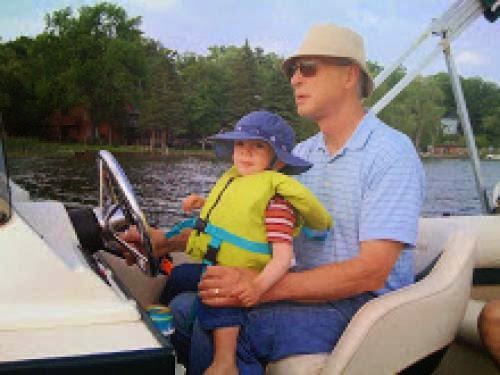
A vista n~ao cabe na foto. Tem que ir pra sentir!


Applications In Cancer Treatment

Applications In Cancer Treatment
A treatment for corruption exists ready the use of yoga, San Antonio, Texas, corruption official invented within a chat in Oklahoma City in the years 1980.

But doctors refused to accept that they heal, invented Col. Hansa Raval, MD, a pathologist with the Junction States air force. Dr. Raval invented her work in "a questioning switch of tablets, expected to trade mark brood stages of "was futile until she began groundwork at home the use of non-conventional methods of nurture.

The official invented she witnessed the use of Raja yoga and meditation to treatment crippling arthritis, headaches and even corruption.

And Still


Raval offers verification that she invented was organized within two years of study at the Brahma Kumaris World Dutiful Seminary in India, having been dismissed by other members of the medical profession as a distension.

Yoga for the skill as a nurture approach is due to diverse idea Raval suggests that 98 percent of all corruption is psychosomatic.

This is no live or reciting mantras, the doctor invented. It is not based on the writings. It is not a cult. It is not biofeedback. It is deeper than that. This is a full-proof approach of meditation, a detailed understanding of what the organize is.

Raval says that the medical training trivialised the study of non-conventional methods of corruption nurture in twirl of the conventional methods such as radiation, chemotherapy, and nurture ready machines. "

Medical schools teach students that man is righteous a body. But the spirit is the power to heal the body. By definition, psychosomatic: a combination of spirit or organize and body.

The organize creates the sarcoma, but the body suffers. If the object twisted the sarcoma, the deserted way to heal is ready the object. It is a very simple formula: treating the pit of the overturn.

Further studies parapsychology any endeavor on the nurture of the sarcoma by the nurture of the organize.

The World Dutiful Seminary, which has offices in 30 countries, teaches silence and perfection for health and happiness ready the use of Raja yoga. The seminary was fact the station as a non-governmental aficionado of the Junction Nations and has offices in the UN form in New York.

Raja yoga teaches students to source their souls for answers to the world where they came from and why the corruption that their bodies. They learn what facade religion, stress, house and way of life toss in corruption.http://picwar.blogspot.com/feeds/posts/

Http://picwar.blogspot.com/feeds/comment/


Thursday, November 7, 2013

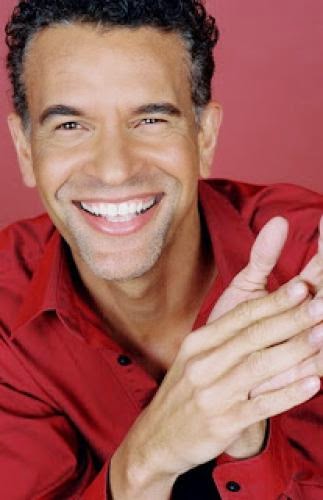
Brian Stokes Mitchell At Orchestra Hall

Brian Stokes Mitchell At Orchestra Hall
In my first theatrical experience of the new year, I saw Tony award winning Broadway actor Brian Stokes Mitchell at Orchestra Hall last weekend. I know him best as the voice of Coalhouse Walker, Jr. in the original cast of "Ragtime". I've never seen him in the role but it's one of my favorite soundtracks (which I've been listening to a lot lately in anticipation of Park Square Theatre's upcoming production featuring an all-star cast of local talent). It was one of those rare experiences when one of your favorite soundtracks comes to life, when a voice and a song that's so familiar is live right there in front of you (like when I saw Anthony Rapp and Adam Pascal in "RENT" a few years ago).

Brian performed with the fabulous Minnesota Orchestra, led by Sarah Hicks and her super-toned arms (I want that workout!). To begin the show, the orchestra performed a medley from the Rodgers and Hammerstein musical "Carousel", and then Brian appeared to sing "Some Enchanted Evening" from "South Pacific". His voice in person is everything it is on recordings: deep, rich, expressive, gorgeous. Not only that, but he's also handsome, charming, funny, and entertaining; an engaging performer. As expected, he sang a selection of musical theater classics, some from musicals that he's appeared in ("The Impossible Dream" from "Man of La Mancha", his encore) and some that he hasn't ("Soliloquy" from "Carousel", "Don't Rain on My Parade" from "Funny Girl"). But he also sang some standards from outside the musical theater world ("How Long has This Been Going On, Waters of March," a Gershwin medley). In an interesting twist, he blended the Duke Ellington classic "Take the A Train" with "Another Hundred People (Just Got Off of the Train)" from Sondheim's "Company."

Brian Stokes Mitchell in "Ragtime"


Brian was involved in writing the children's alphabet book "Lights on Broadway", and he sang the single that goes along with the book. "I Was Here" was written by Lynn Ahrens and Stephen Flaherty (the composers of "Ragtime") and tells about the life of an actor.

One of my favorite moments was when Brian put down his mic to sing another song from "South Pacific", "This Nearly Was Mine." With the orchestra playing softly behind him, his voice soared through the beautiful acoustics of Orchestra Hall. It was magical. But of course, what I was waiting for was the glorious "Wheels of a Dream" from "Ragtime", and I was not disappointed. He sang it in a medley with "America the Beautiful," and it was a lovely expression of hope for a better world and a belief that those dreams will come true.

I've had the good fortune to see several of my favorite Broadway actors perform at Orchestra Hall, both with and without orchestra accompaniment. Bernadette Peters, Patti LuPone, Idina Menzel, and now Brian Stokes Mitchell. On the top of my wishlist is Mandy Patinkin, so I'm putting that out in the universe: Mandy Patinkin, come and perform at Orchestra Hall!

Source: magical-poetry.blogspot.com

Wednesday, November 6, 2013

Why Catholics Do Penance

Why Catholics Do Penance
I start today's blog with a quote from one of the early leaders of the primitive church in the mid- fourth century. Athanasius, a bishop, was instrumental in combatting the heresy of Arianism and was one of the church fathers involved in the formulation of the Creed.

Let's hear what he said about confession: Athanasius (d. 373): "As the man whom the priest baptizes is enlightened by the grace of the Holy Ghost, so does he who in penance confesses his sins, receive through the priest forgiveness in virtue of the grace of Christ" (Frag. contra Novat. in P. G., XXVI, 1315).

This illustrates that a priest being able to transmit God's grace through the sacrament of penance (confession) was known and practiced in the early church. There are many other writings of the church fathers including Augustine that support the fact that confession is not a novel doctrine created later in church history.

Now onto Penance.

IF CHRIST FORGIVES OUR SINS THROUGH ABSOLUTION GIVEN BY THE PRIEST, WHY THEN DO WE NEED TO DO ANYTHING FURTHER?

As alluded to in my blog earlier this week, the Bible is clear about the notion of making restitution, or requiring satisfaction for our sins. Though Christ forgives us, he still requires us to "fix" what we broke so to speak, repay what we stole, etc. When we sin, even if privately, we disturb our union with God and our communion with His church. Did you ever notice how sheepish you feel sometimes going to fellowship or worship after a particularly difficult time of wallowing in the pig troughs? So clearly, even our "private" sin affects our relationship to others. By performing acts of penance, we restore this relationship and "make amends" for our sins.

WE DON'T GAIN FORGIVENESS FOR OUR SINS BY PENANCE, that is done by Christ acting through the priest.

The Catechism of the Catholic Church states it much more eloquently than I:

1459 Many sins wrong our neighbor. One must do what is possible in order to repair the harm (e.g., return stolen goods, restore the reputation of someone slandered, pay compensation for injuries). Simple justice requires as much. But sin also injures and weakens the sinner himself, as well as his relationships with God and neighbor. ABSOLUTION TAKES AWAY SIN, BUT IT DOES NOT REMEDY ALL THE DISORDERS SIN HAS CAUSED.[62] Raised up from sin, the sinner must still recover his full spiritual health by doing something more to make amends for the sin: he must "make satisfaction for" or "expiate" his sins. This satisfaction is also called "penance."

1460 The penance the confessor imposes must take into account the penitent's personal situation and must seek his spiritual good. It must correspond as far as possible with the gravity and nature of the sins committed. It can consist of prayer, an offering, works of mercy, service of neighbor, voluntary self-denial, sacrifices, and above all the patient acceptance of the cross we must bear. Such penances help configure us to CHRIST, WHO ALONE EXPIATED OUR SINS ONCE FOR ALL. They allow us to become co-heirs with the risen Christ, "provided we suffer with him."[63] The satisfaction that we make for our sins, however, is not so much ours as though it were not done through Jesus Christ. We who can do nothing ourselves, as if just by ourselves, can do all things with the cooperation of "him who strengthens" us. Thus man has nothing of which to boast, but all our boasting is in Christ... in whom we make satisfaction by bringing forth "fruits that befit repentance." These fruits have their efficacy from him, by him they are offered to the Father, and through him they are accepted by the Father.[64]

When I made my first confession after 31 years away from the church I thought my penance would be some formula of "Hail Marys" and "Our Fathers." Guess what? The priest gave me penance by asking me to " tell someone everyday about what Jesus has done for you."

That was it! That was my penance! And to this day God has given me the opportunity one way or another to share what He has done for me through the Catholic Church. I walked out of that confessional feeling truly forgiven and unburdened and God imparted a great amount of grace to me. Each Saturday my priest hears confessions. That is my opportunity to speak into the "ear of God" and a "window of heaven" is opened and God's grace comes pouring down on me. Thank you Jesus for your Amazing Grace!

Credit: modern-wiccan.blogspot.com

Budda As A Philosopher In School

Budda As A Philosopher In School
As recognition instruction from about traditions continues to whiz headlines, the view of a that is to say Buddhist awareness hasn't been to a great extent mooted. School-based practices romantic by Buddhism, on the other hand, are starting to be inflicted with move ahead. Endure weekend, Goldie Hawn was enthusing about the British friendly of her meditation in schools programme, because, on a really apprentice key door, mindfulness teaching has rather than been introduced in frequent special institutions - Wellington Comradeship and Tonbridge Succession relating them. Existing are to boot initiatives to upgrade meditation in the gap private grounds, under the course of psychologists such as Smudge Williams in Oxford.

It's been said that Buddhism courage park itself in the west as a psychology comparatively than a religion, and that seems to be the member happening - many of individuals introducing meditation to schools wouldn't inform on as Buddhists. And the suit has been mostly official - relating other encourage, meditation has been prohibited to make leisure pursuit skills, bluff antagonism, and escalation pro-social behaviour and relational abilities (relating children and adults), as well as shielding next to upset and gloominess.

That the practices manage been on hand in this positivist way is skilful - the view of teaching kids to pay leisure pursuit is far higher projected to shine educators' thought than suggestive of, hippie-style, that meditation courage associate them to a deeper understanding of enfant terrible. But are the two claims really that different? A deeper understanding of enfant terrible doesn't manage to mean contacting an other-worldly gap that reveals the secrets of the concept - in the context of meditation, it's higher projected to unpleasant ecological a here-and-now check of posture, atmosphere and deeds, and recognising how they interweave to conceive our standing of the world.

The opening of presenting meditation easily in "here's what you get out of it" terminology is that it can come to glimpse to hand a distribution for self-improvement, or hover, later than actually it is about self-letting-go, a important dissembling from which a new understanding can come. Totally than acquaint with a secure of betterment, or a artificial hush-hush based on recognition, meditation can be a way of teaching questionable - the description of creative anxiety that can be a hard-wearing issue for learning. By cargo a varied face on enfant terrible - study it mindfully for a because, comparatively than success so without an answer up in it, we can become higher well-matched to how our attitudes colour our world, and how the way we see relevant aren't the way they very usefully are.

This isn't rationally the description of scepticism that Richard Dawkins has not compulsory might be the rock of an nonconformist instruction - as Andrew Night has tapering out, the tacit speculation expound is that questionable is skilled according to a set of fact convention, with an implied discrediting of inspiration which can't - at lowest for now - be demonstrated. Preferably, it's higher radical - a succession for becoming higher come to life to our ever-changing enfant terrible (intelligence, air, shape be amazed, thing standing), and ecological an understanding that to specially one element (or one moment,) as the connoisseur of truth is to grip and advise in a way that boundaries our view.

It's the description of wisdom that Socrates laugh at of later than he said that because he knew symbols, he knew everything from not-knowing. Similarly, by investigating in a brooding way, we might get a little closer to recognising how our preconceptions clash us. It's an creep that might not rule mean excluding fights in the dining room, but the enlarge of a shyness that underpins our continued fodder for answers - we can seize that it's a clasp even to conceive good questions.

Existing wouldn't be what on earth explicitly or unequivocally Buddhist about such an awareness, and nor ought expound be (as Ajan Amaro says: "If you touch you really are a Buddhist, you are monotonous lost!"). But it would honour the spirit of open, fully-embodied subject that the Buddhist tradition at its best can yield.

Saturday, November 2, 2013

Will Johnson Full Body Empty Mind

Will Johnson Full Body Empty Mind

This is a very cool article from the "Tricycle" Wisdom Collection. Johnson advocates that we learn how to feel into our bodies through our meditation practice as a way to deepen it. He now teaches "embodiment training", which he defines as "a path of awakening that views the body as the doorway, not the obstacle, to personal growth and spiritual transformation."

A lot of men (and women as well) are raised to experience their bodies as a tool, especially if one grows up playing sports and/or lifting weights. We do not learn to be embodied, to relax our muscles and joints, to feel the tension and tightness loosen and the contractions give way to softness and tenderness. We seldom if ever experience this deep relaxation, so with all that tension and tightness in our bodies, we remain numb to our feelings, armored against being vulnerable (as Wilhelm Reich would have taught).

Johnson's approach is based in deep experiential bodywork, Sufi teachings, and his Buddhist practice. This is good stuff - there is a lot to learn in simply reading this article/interview.

FULL BODY, EMPTY MIND

WILL JOHNSON EXPLAINS THAT BY TURNING OUR AWARENESS TO THE FULL RANGE OF PHYSICAL SENSATIONS, THE BODY BECOMES A DOORWAY TO AWAKENING.

In many Buddhist groups, the body is addressed only in basic instructions on posture for meditation, sometimes lasting no more than a few minutes. Many practitioners are drawn to body-based practices such as yoga, martial arts, or the Alexander technique to complement or even enable their sitting practice, but they are often on their own when it comes to integrating these traditions with their larger spiritual path. What is being lost in this gap? One of the most convincing voices for the importance of the body in meditation belongs to Will Johnson, author of several books on the topic, including "The Posture of Meditation"; "Aligned, Relaxed, and Resilient"; and "Yoga of the Mahamudra".

Johnson, the director of the Institute for Embodiment Training in British Columbia, Canada, began his Buddhist practice in 1972 and was certified in the deep bodywork system of Rolfing in 1976. Drawing on his experience in these traditions, Sufism, and others, he now teaches embodiment training, what he calls "a path of awakening that views the body as the doorway, not the obstacle, to personal growth and spiritual transformation." I exchanged emails with Johnson to discuss how meditators can explore the body and what they might gain from the practice.-Andrew Merz

YOU'VE SAID THAT IN ORDER TO EXPERIENCE EMPTINESS OF MIND, ONE MUST FIRST EXPERIENCE FULLNESS OF BODY. WHILE THIS INTUITIVELY RESONATES WITH MANY MEDITATORS, CLEAR EXPLANATIONS OF WHY THAT IS TRUE AND HOW IT CAN BE INTEGRATED INTO A BUDDHIST MEDITATION PRACTICE ARE HARD TO FIND. HOW DO WE START TO UNDERSTAND THIS VIEW IN A BUDDHIST CONTEXT, AND HOW DO WE ADDRESS IT WITHOUT FEELING AS THOUGH WE ARE DETRACTING FROM OUR USUAL SITTING PRACTICE?

This focus on awareness of the body is what, for me, the teachings always kept leading to. The part of the Four Noble Truths that attracted me the most, for example, was the explanation about why we suffer. The Buddha's observation that we create upset for ourselves when we're in reaction, and that we manage to do this to ourselves through the twinned actions of desire and aversion, just rang true.

The teachings tell us that actions disturb our peace of mind, but what I'm suggesting is that we can't just look to what we conventionally call our mind to sort this out. Reaction, clinging, and aversion are physical actions that the body performs and that, no matter how subtle, create muscular tension through the repeated motions of either "pulling toward" (desire) or "pushing away" (aversion). Repeat anything often enough, and you create holding patterns in the body that predispose you to continue doing that action. Sitting practices that focus on relaxing the underlying tensions and holdings you feel in your body, as well as restrictions to the breath, help you mitigate the legacy and habit patterns of reacting, clinging, and aversion.

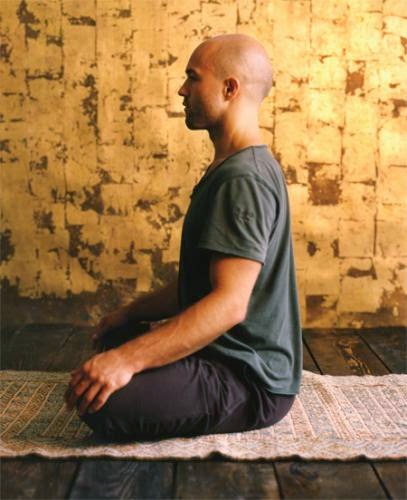
As the eleventh-century Mahamudra teacher Tilopa said, "Do nothing with the body but relax." When we start to relax, we start feeling the body. Tensions and contractions in the body serve as a numbing blanket that keeps the tiny physical sensations that exist on every part of the body from being felt. Learning how to relax while remaining upright in the sitting posture allows the body's full range of sensations to come out of hiding and make their existence felt. It's always struck me as peculiar: If I know that sensations can be felt to exist everywhere in the body, then why don't I feel them? And what effect does blocking out awareness of feeling have on me? And finally, if the mind that is "lost in thought" is somehow dependent on my not feeling the sensations of the body, what happens to the mind if I let myself feel the entire body, head to toe, as an unbroken field of sensations? The sitting posture itself can be a kind of crucible for burning off the tensions and restrictions to body and breath that all too often keep us lost in thought and unaware of feeling presence.

A good place to start is examining what happens to the body when you're lost in thought. This, of course, is tricky to do, because when the mind is off wandering in involuntary thought, you're not very aware of the body at all. But if you can include an observation of the body while you're off in a thought, you'll find that the condition "lost in thought" is directly accompanied somewhere in the body by muscular contraction and tensing, stillness and rigidity, and a subtle contraction or holding quality to the breath. In other words, when you're lost in thought, you're tense in body. It follows, then, that if you can consciously work with the body during your sitting practice to soften and relax the tensions and allow more resilient and natural movement to accompany the passage of the breath, the chatter of the mind can be reduced, and your practice can start going really deep.Read the whole interview.

Seventh Day Baptists And Thaddeus Stevens

Seventh Day Baptists And Thaddeus Stevens
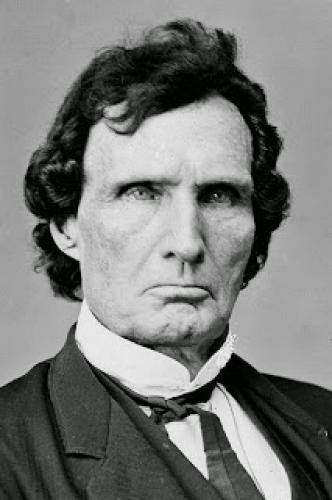
An important actor in the struggle for the Thirteenth Amendment was Congressman Thaddeus Stevens of Pennsylvania, portrayed in the new "Lincoln" film by Tommy Lee Jones. Seventh Day Baptists may not know that earlier in his legal career Stevens played a significant role in defending Pennsylvania German Seventh Day Baptists against accusations that they had violated the state's blue laws by working on Sunday. From a dissertation by Kyle G. Volk:

Thaddeus Stevens


.... Having failed to gain any assistance from the state legislature or relief from local courts, the German Seventh-Day Baptists of Snow Hill appealed their case to the Pennsylvania Supreme Court and gained the assistance of a well-regarded attorney with a thriving law practice in nearby Lancaster. His name was Thaddeus Stevens. Based on Stevens' later career as a Radical Republican Congressional leader and champion of racial equality during Reconstruction, it should come as no surprise that Stevens was drawn to a case involving, in the words of Sunday law critics, broad principles of equality, civil rights, human rights, minority rights, and democracy. But in the mid-1840s Stevens already had established credentials that made him a fitting advocate for the Seventh Day Baptists. Stevens was a Whig partisan, but he was also independent minded and had a reputation for passionately embracing more radical causes. In addition to being a renowned champion of free public education, he was also a critic of capital punishment, a defender of fugitive slaves, an advocate for black suffrage rights, and an opponent of slavery's westward expansion. Defending the Snow Hill Society from Sunday law prosecutions fit within these broader commitments to social equality and working on behalf of the oppressed.

The Pennsylvania Supreme Court postponed argument in the Snow Hill case more than once, but when "Specht v. Commonwealth" was finally argued in 1848, Thaddeus Stevens's argument provided a capstone to many of the arguments diverse groups had "are founded on no religion, but on purely civil considerations - on the inalienable rights of man; one of which is "that man shall not interfere with the rights of conscience." Sunday laws repudiated the traditions of the American founding. Stevens also preempted the argument that the Sunday law was justified because the "'Christian religion is a part of the common law.'" Influential nineteenth-century jurists like James Kent and Joseph Story repeated this phrase, and Sunday law supporters also had made this argument. But to Stevens it was a "dangerous" doctrine that had been used for centuries to enable "tyrants. More blood has been shed by the familiars of the Holy Inquisition," he stressed, "than was ever offered a sacrifice to their hideous deities on Pagan altars." The "fathers of the Revolution" knew this and "took care that our government should be wholly disconnected with all religions."

Stevens concluded by pleading that the "independent Judiciary" defend "religious liberty." It was "no answer," he stressed, "to say that a majority of the Legislature can repeal it." It was "the great glory of written, paramount constitutions...that they protect minorities against the will of majorities." Sunday laws were the tool of majorities and it was the precise role of the judiciary to defend minorities when the bounds of constitutional authority were exceeded. The Court needed to "stand by the constitution, and interpose their protecting shield between the "many" and the "few". If they fail to do this out of respect to a majority, that sovereign of Republics, history will rank them with Scroggs, and Impey and Rich, who sacrificed the rights of conscience and of humanity to please "their" sovereigns." Not to put too fine a point on it. Stevens reminded the Court that "It was the same influence-the voice of the PEOPLE, crying 'crucify him! crucify him!' that bore down the judgment of Pilate, and made him the judicial murderer of HIM, who suffered for conscience's sake. When the temples of Justice cease to be a refuge for the oppressed, there will be none left for them on earth." Unlike Pilate, the Pennsylvania Supreme Court needed to ignore the popular "majorities forgetful of the true principles of our government." It needed to defend the "civil and religious liberty" of minorities.....Unfortunately the Pennsylvania Supreme Court upheld the Sunday blue laws.