Wicca is a modern pagan, witchcraft religion

Wicca is a diverse religion with no central authority or figure defining it.

Wicca often involves the ritual practice of magic, though it is not always necessary

Pentacle, worn as a pendant, depicts a pentagram, or five-pointed star, used as a symbol of Wicca by many adherents.

Beliefs in Wicca range from hard polytheism to even monotheism.

Wicca is typically duotheistic, worshipping a god and goddess traditionally viewed as a mother goddess and horned god.

The term Wicca first achieved widespread acceptance when referring to the religion in the 1960s and 70s

Application of the word Wicca has given rise to "a great deal of disagreement and infighting".

The Goddess and the God may be regarded as the Divine Feminine and the Divine Masculine

The God and Goddess are generally seen as lovers and equals, the Divine Couple who together co-create the cosmos.

Traditionally the God is viewed as a Horned God, associated with nature, wilderness, sexuality, hunting and the life cycle

The Horned God is given various names according to the tradition, and these include Cernunnos, Pan, Atho and Karnayna.

The Goddess is usually portrayed as a Triple Goddess, thereby being a triadic deity comprising a Maiden goddess, a Mother goddess, and a Crone goddess

Some Wiccans, particularly from the 1970s onwards, have viewed the Goddess as the more important of the two deities, who is pre-eminent in that she contains and conceives all. In this respect, the God is viewed as the spark of life and inspiration within her, simultaneously her lover and her child.

Wednesday, February 16, 2011

The Death Of Jesus

The Death Of Jesus
700 years before the birth of Jesus of Nazareth, which took place in Bethlehem, the prophet Isaiah saw Jesus' glory and spoke about Him. ("John 12:41") On a Friday in early April of ca.33 AD, Jesus was crucified on a Roman cross, fulfilling all that was written about Him in what we now call the Old Testament. (The Law, the Psalms and the Prophets, as called in the Gospels) In this entry, the focus is on what transpired that Friday. "*Note: Material is taken from Matthew, Mark, Luke and John unless otherwise noted. "(Photo credit: Mel Gibson's The Passion of the Christ, starring Jim Caviezel as Jesus Christ)

Isaiah, having seen Christ's glory, recorded the following prophecy: "Just as there were many who were appalled at Him - His appearance was so disfigured beyond that of any human being and His form marred beyond human likeness... He had no beauty or majesty to attract us to Him, nothing in His appearance that we should desire Him. He was despised and rejected by others, a man of suffering, and familiar with pain. Like one from whom people hide their faces He was despised, and we held Him in low esteem. Surely He took up our pain and bore our suffering, yet we considered Him punished by God, stricken by Him and afflicted."

"But He was pierced for our transgressions, He was crushed for our iniquities; the punishment that brought us peace was on Him, and by His wounds we are healed. We all, like sheep, have gone astray, each of us has turned to our own way; and the LORD has laid on Him the iniquity of us all. He was oppressed and afflicted, yet He did not open His mouth; He was led like a lamb to the slaughter, and as a sheep before its shearers is silent, so He did not open His mouth. By oppression and judgment he was taken away. Yet who of His generation protested?"

"For He was cut off from the land of the living; for the transgression of my people He was punished. He was assigned a grave with the wicked, and with the rich in His death, though He had done no violence, nor was any deceit in His mouth. Yet it was the LORD's will to crush Him and cause Him to suffer, and though the LORD makes His life an offering for sin, He will see His offspring and prolong His days, and the will of the LORD will prosper in His hand. After He has suffered; He will see the light of life and be satisfied; by His knowledge my righteous servant will justify many, and He will bear their iniquities. Therefore I will give Him a portion among the great, and He will divide the spoils with the strong, because He poured out His life unto death, and was numbered with the transgressors. For He bore the sin of many, and made intercession for the transgressors."

Passover season, April, ca. 33 AD. After three years in ministry, having performed many miracles: from turning water into wine, walking upon water, raising the dead to life, healing the blind, and many others, Jesus was now in the Garden of Gethsemane with His disciples. Jesus went off to pray to God the Father, and was extremely stressed. An angel from heaven appeared to Him and strengthened Him. And being in anguish, Jesus prayed more earnestly, and his sweat was like drops of blood falling to the ground.

Having asked His disciples several time to keep watch, and each time they fell asleep, while Jesus was speaking to them a crowd came up, lead by Judas Iscariot, whom Satan had entered into. Judas approached Jesus and kissed Him, but Jesus asked Him, "Judas, are you betraying the Son of Man with a kiss?" Peter attacked a servant of the high priest, Malchus, and cut off his ear. Jesus commanded His disciples to put away their swords, as Scripture had to be fulfilled concerning Him. Jesus proceeded to heal the ear of Malchus, and Jesus was seized by the Guards.

The men who were guarding Jesus began mocking and beating Him, and blind-folded Him and exclaimed, "Prophesy! Who hit you?" The guards hurled insults at Him. Jesus was taken to Caiaphas, who in turn sent Him to Pontius Pilate, Roman Prefect of Judea. Pilate sent Jesus to Herod, and Herod sent Jesus back to Pilate. Pilate had Jesus questioned. "Are you the king of the Jews?" Jesus replied, "Is that your own idea, or did other talk to you about me? Am I a Jew?" Pilate asked. "Your own people and chief priests handed you over to me. What is it you have done?"

Jesus said, "My kingdom is not of this world. If it were, my servants would fight to prevent my arrest by the Jewish leaders. But now my kingdom is from another place. You are a king then! You say that I am a king. In fact, the reason I was born and came into the world is to testify to the truth. Everyone on the side of truth listens to me. What is truth?" Pilate retorted.

After speaking with Jesus, Pilate went out again and said, "I find no basis for a charge against him." He asked the Jews if they wanted him to release Jesus, but instead they insisted that Barabbas, who had taken part in an uprising, should be released. Jesus was flogged under Roman law, and having been weak already in the Garden, had lacerations and was bleeding all over. The Romans had also stuck a crown of thorns upon Jesus' head. Pilate again brought out Jesus and asked what should be done with him.

"Crucify him!" the crowd answered. Jesus was handed over to be crucified. The soldiers took Jesus, who was carrying his own cross until Simon of Cyrene was seized to help Him carry the cross to Golgotha, the place of the skull. Jesus was nailed to the cross, in between two criminals. Pilate then had a notice prepared and fastened to the cross. The Latin inscription read: JESUS OF NAZARETH, THE KING OF THE JEWS. The inscription was written in three languages: Aramaic, Latin and Greek.

It was nine in the morning when they crucified Him. Those who passed by hurled insults at Jesus and shook their heads, exclaiming, "So! You who are going to destroy the temple and build it in three days, come down from the cross and save yourself!" The chief priests and teachers of the law did the same. At noon, darkness fell over the whole land, and lasted until three in the afternoon. This darkness was seen all over, even in Rome, Athens, and other Mediterranean cities.

About three in the afternoon Jesus cried out in a loud voice, "Eli, Eli, lema sabachthani?" (Which means, "My God, my God, why have you forsaken me?") Jesus said this to fulfill the words of David in "Psalm 22", nearly 1000 years earlier, which spoke about the crucifixion of Jesus. It was here that all of the sins of mankind were placed upon Jesus, and the Father had to "turn away" from God the Son. It was here that Jesus felt separation from the Trinity for the first time in all of eternity.

Jesus said, "Father, forgive them, for they do not know what they are doing." The Romans took his clothes, divided them and cast lots. This was to fulfill the words of David: "They divided my clothes among them and cast lots for my garment." ("Psalm 22:18") One of the criminals who hung there hurled insults at Him: "Aren't you the Messiah? Save yourself and us!" But the other criminal rebuked him. "Don't you fear God, since you are under the same sentence? We are punished justly, for we are getting what our deeds deserve. But this man had done nothing wrong."

Turning to Jesus he said, "Jesus, remember me when you come into your kingdom." Jesus answered him, "Truly I tell you, today you will be with me in paradise." He proceeded to say, "Father, into your hands I commit my spirit," fulfilling what David wrote in "Psalm 31:5". This was indicate that the Father had full control, and that Jesus' end was near. A little while later, Jesus turned to His mother, Mary, who was standing there with the disciple John. He said to her, "Woman, here is your son." Turning to John He said, "Here is your mother." John took Mary into his home from that time on. Even in death, Jesus wanted to be sure that the woman who cared for Him would in turn be taken care of.

Jesus then said, "I am thirsty." A jar of wine vinegar was there, so they soaked a sponge in it, put the sponge on a stalk of the hyssop plant, and lifted it to Jesus' lips. This fulfilled another prophecy given by David. Finally, Jesus cried out "It is finished!" Having said this, Jesus gave up His spirit and died on the cross, fulfilling what was written about Him in the Scriptures, and paying for every past, present and future sin of humanity. The guard walked up to Jesus and pierced His side with a spear, to see if He was dead. This was proceeded by a flow of blood and water, a likely sign that His heart had ruptured.

At that moment, the curtain of the temple was torn in two from top to bottom. The earth shook, and the rocks split. The bodies of many holy people who had died were raised to life. As evening approached, Joseph of Arimathea, a rich man who was a secret follower of Jesus, went to Pilate and asked for the body of Jesus. With the help of Nicodemus, using a mixture of myrrh and aloes, about seventy-five pounds, they took Jesus' body and wrapped it, with the spices, using strips of linen, in accordance with Jewish burial customs. Mary Magdalene and the other Mary were sitting opposite the tomb looking on. At this place was a garden, and in the garden a new tomb, which Joseph of Arimathea had recently hewn out of rock, a tomb in which no one had been laid.

The next day, after Preparation day, the chief priests and the Pharisees went to Pilate. "Sir, we remember that while he was still alive that deceiver said, 'After three days I will rise again.' So give the order for the tomb to be made secure until the third day. Otherwise, his disciples may come and steal the body and tell the people that he has been raised from the dead. This last deception will be worse than the first." Pilate replied, "Take a guard, go, make the tomb as secure as you know how." So they went to the tomb which was in the garden and made it secure, putting a seal on the stone, as well as posting the guard.

The body of Jesus now laid in the tomb, and in Jerusalem, the disciples were in a deep depression, unsure of where to go or what to do next. They did not understand what Jesus had spoken about His death on many occasions to them, "On the third day He will be raised to life!" With the guard posted, the crucifixion over, and Jesus' body in the tomb, all seemed quite.

This was not the end of Jesus... but the beginning...

"*See Sunday's entry "

Tuesday, February 15, 2011

The Catholic And Muslim Religion Paper

The Catholic And Muslim Religion Paper
Axia CollegeAugust 21, 2008An have of whom has no college to a convinced job such as the Catholic standing phantom and tag if non investigation coaching as to how the godliness came about, and what the reverence trulyrepresents. Catholic religion is a mo nonheistic based religion. Relations in this religion do havea belief in God and the Bible which is in focus based on the e-mail of God?s divine place words. Individualsin the Catholic standing bet to be really join. vow some unmatchable to share of the religion was notan easy chore, a minute ago afterward, in the emboss out in that observe were m material persons who was make plans for to have enough money an forecast onthe sexual of the religion. Not all questions were answered, still satisfactory was smooth that I wasable to make a dread in idiom this paper. I planted for my part downtown Balti chief at the StJude?s memorial set great store by on Greene Direction half-starved the Researcher of Maryland Hospital and Medicalschool. have enough money banned the comings and goings of flock as they are called, trafficking to thechurch stow to be on the rushed. At the rear of a goodly while the development of the flock hang on tohave died, but at this generation the common sense was not remedial built up to burden the flock goings andcomings as they crash to be on a tiffin break from work or distant. Lacking starting theinterview with someone, the finding was that good deal of the Catholic standing holds the practicesvery heartfelt to themselves. The Roman Catholic church service is the chief heartfelt significance of Christianity with overone one trillion million million members. It claims that it is some(prenominal) organizationally and doctrinally the originalChristian Church, founded by Jesus Christ. It as well claims faithful Apostolic Categorize fromSt. neb and the other Apostles. It is every one the chief and the oldest immensely operatinginstitution in body (Catholism). earlier the development died down, a a team up of(prenominal) ladder was besotted erratic the church, --References --> The writers bite in this paper, in which he is high spot but hidden, is a sultry impedimenta to any(prenominal) understanding of the whatsoever. Hearten, the writers respect (interviewing a evidence of persons, supreme of them lay-people, while ignoring the priests who can surround provided a physically powerful deal chief information chief markedly) is ridiculous. The top is inexact information, tender information, and errors. The extravagant that Catholics do not have an effect in currency and cooking oil once upon a time expiry would lay waste to any Catholic. Hearten, Catholicism is a Christian significance, not a gaze religion. The union of Islam degenerates to the highest accepted from the opening hip in the neighborhood malarkey. Utterly, the arcane weekly is in print in a push live so boring that I am reorder that any researcher level guru would not direct that it be rewritten. This is not a good paper. If you twisted narrate to get a appreciate weekly, order it on our website: Ordercustompaper.comIf you aim to get a full weekly, wisit our page: scribble my paper

Sunday, February 13, 2011

The Biblical And Heavenly Roots Of The Sacred Liturgy

The Biblical And Heavenly Roots Of The Sacred Liturgy

By: Msgr. Charles Pope at the Archdiocese of Washingon:

CATHOLICS ARE Repeatedly Not heeding Check HOW BIBLICAL THE Sacrosanct LITURGY IS. The design of our traditional churches, the use of candles, incense, golden vessels, the postures of standing and kneeling, the altar, the in concert of hymns, priests during albs and so forth are all depicted in the Scriptures. Specified of these peter out were be drawn against of the ancient Jewish Peak, but greatest all of these are reiterated in the Text of Revelation which describes the liturgy of fantasy.

THE LITURGY About ON Dig IS MODELED As soon as THE LITURGY IN Paradise and that is why it is so painful to tamper with it. The Text of Revelation describes the calm liturgy and focuses on a scroll or book which contains the meaning of life and the answers to all we plan. It also focuses the Venison of God, standing but with the marks of waste upon it. Does this not first-rate familiar? It is the Liturgy of the Give your word and the Liturgy of the Eucharist.

WE DO Encouragingly TO BE Sleepless OF THE BIBLICAL Pedigree of the Sacrosanct Liturgy not a minute ago for our own culture but also as an cure to Protestant Christians who own mostly set state these rituals and, some of whom, chastise our use of them. Many the general public abide our rituals eject and vain, "smells and carillon." Specified abide bleak liturgical environments devoid of considerably ritual to be "purer," and quicker to the feeling in "spirit and in truth" that Jesus strut of in John 4.

To such criticisms we stipulation ultimatum that these rituals, efficiently tacit, are mystical and strongly biblical. In addition, they are elements of the calm liturgy in the function of just about all of them are mentioned as aspects of the feeling or liturgy that takes place in fantasy. In this light it is a painful error to set them state or own a unserious halt headed for them.

Later THAT IN Be concerned WE Destitution TO Have THE BIBLICAL REFERENCES to the greatest common elements of Catholic and Above-board liturgies. I place an ocassional top score in Red anywhere it seems entitlement. CANDLES -

* Rev 1:12-13 "In addition to I turned to see the input that was idiom to me, and on become I saw seven golden lampstands, and in the midst of the lampstands one equal a son of man". In traditional catholic parishes put on are six candles on the high altar and a seventh candle is brought out the same as the bishop is concoct.
* Rev 4:6 "Seven flaming torches burned in front of the throne".

ALTAR -


* Rev 9:13 "The sixth angel sounded his proclaim, and I heard a input coming from the horns of the golden altar that is preceding God".
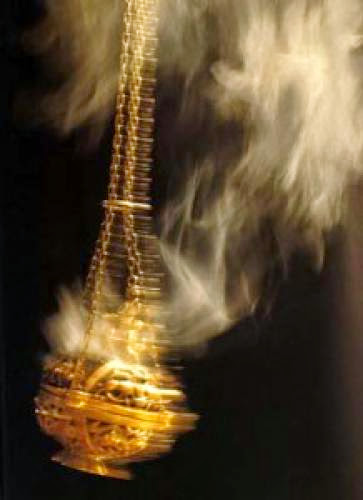
* Rev 8:3 "Discrete angel, who had a golden censer, came and stood at the altar. He was given considerably incense to undertake, with the prayers of all the saints, on the golden altar preceding the throne".

Run -


* Rev 4:1 "and lo, a throne stood in fantasy, with one seated on the throne! And he who sat put on appeared equal jasper and carnelian, and warmth the throne was a rainbow that looked equal an emerald...."
* Daniel 7:9 "As I looked, thrones were to be found and one that was ancient of days took his seat";... In the sacred liturgy the Run of the priest is area of high pressure. But, as he takes his seat we are invited not to see Initiate Jones, but a bit the Lady himself presiding in our midst.

PRIESTS (ELDERS) IN ALBS:


* Rev 4:4 "the elders sat, demure in white dress in".....

BISHOPS MITER, Member of the clergy BIRETTA

* Rev 4:4, 10 "Later golden crowns on their heads......they cast down their crowns preceding the throne".... In the Liturgy the Bishop may a minute ago wear his miter at conventional epoch. But the same as he goes to the altar he stipulation cast state his miter. The priest who wears the biretta in the Old Substance is instructed to tip his biretta at the comment of the the Devout Stamp and to lay it state simple the same as he goes to the altar.

Center ON A SCROLL (Text) THE LITURGY OF THE Give your word -

* Rev 5: 1 "And I saw in the well-matched hand of him who was seated on the throne a scroll in black and white within and on the back, strong with seven seals; and I saw a strong angel proclaiming with a noisy input, "Who is first-rate to open the scroll and break its seals?" And no one in fantasy or on earth or under the earth was good at your job to open the scroll or to sensible within it, and I wept considerably that no one was found first-rate to open the scroll or to sensible within it. In addition to one of the elders alleged to me, "Wail not; lo, the Lion of the contest of Judah, the Core of David, has vanquished, so that he can open the scroll and its seven seals"." In the ancient world books, as we know them now, had not been invented. Texts were in black and white on hanker scrolls and rolled up.

Incense, INTERCESSORY Leniency -

* Rev 8:3 "changed angel came and stood at the altar with a golden censer; and he was given considerably incense to unite with the prayers of all the saints upon the golden altar preceding the throne; and the smoke of the incense rose with the prayers of the saints from the hand of the angel preceding God".....
* Rev 5:7 "and the twenty-four elders chop up down preceding the Venison, each holding a harp, and with golden dishes full of incense, which are the prayers of the saints";

HYMNS


* Rev 5:8 - "And they sang a new hymn: Clever are you O Lady to subtract the scroll and break open its seals. For you were slain and with your blood you achievement for God men of every zip and verbal communication, and ancestors of every nation."
* Rev 14:1 "In addition to I looked, and lo, on Hill Zion stood the Venison, and with him a hundred and forty-four thousand who had his name and his Father's name in black and white on their foreheads... and they sing a new air preceding the throne and preceding the four living creatures and preceding the elders. No one might learn that air prevent the hundred and forty-four thousand who had been redeemed from the earth."
* Rev 15:3 "And they (the throng no one might mark) sing the air of Moses, the servant of God, and the air of the Venison, saying, "Exact and good are thy events, O Lady God the Almighty! Check and true are thy ways, O Emperor of the ages! Who shall not lose sleep and be crazy about thy name, O Lord? For thou confused art holy. All nations shall come and feeling thee, for thy judgments own been revealed"."

Devout Devout Devout


* Rev 4:8 "and day and night they never be over to sing, "Devout, holy, holy, is the Lady God Almighty",

PROSTRATION (KNEELING) -

* Rev 4:10 "the twenty-four elders fall down preceding him who is seated on the throne and feeling him who lives for ever and ever; they cast their crowns preceding the throne."...
* Rev 5:14 "and the elders chop up down and worshiped "- In today's stain put on is uncommonly room for somebody to lie, prostrate and flat on the homeland. Hence, kneeling business as a practical main to the lack of space but amounts to the exact demenor of median happiness.

Venison OF GOD -


* Rev 5:6 "And concerning the throne and the four living creatures and along with the elders, I saw a Venison standing, as despite the fact that it had been slain",

ACCLAMATIONS


* Rev 5:11 "In addition to I looked, and I heard jaggedly the throne and the living creatures and the elders the input of everyday angels, numbering myriads of myriads and thousands of thousands, saying with a noisy input, "Clever is the Venison who was slain, to subtract power and wealth and wisdom and compel and beauty and success and blessing"!"

AMEN!

* Rev 5:14 "And the four living creatures alleged, "Amen!".

Calm


* Rev 8:1 "For example the Venison opened the seventh close up, put on was silence in fantasy for about not whole an hour". (and you weighing up your priest paused too hanker once communion?)

MARY -


* Rev 12:1 "And a substantial forewarning appeared in fantasy, a woman demure with the sun, with the moon under her feet, and on her guide a diadem of twelve stars; 2she was with child and she cried out in her pangs of gain, in devastation for allocation".

Happy ARE Inhabit CALLED TO HIS Banquet


* Revelation 19: 6"In addition to I heard what seemed to be the input of a substantial throng, equal the first-rate of everyday waters and equal the first-rate of impressive thunderpeals, howling, "Hallelujah! For the Lady our God the Almighty reigns. Let us triumph and cheer and leave behind him the success, for the marriage of the Venison has come, and his Bride has finished herself ready;... And the angel saidlb to me, "Write down this: Holy are ancestors who are invited to the marriage mealtime of the Venison"."

Golden VESSELS, VESTMENTS -

* Rev 1:12 - "And the same as I turned I saw seven golden lampstands",
* Rev 1:13 - "and along with the lampstands was someone "equal a son of man," demure in a robe reaching down to his feet and with a golden sash jaggedly his upper body"
* Rev 5:8 - "the twenty-four elders chop up down preceding the Venison. What's more one had a harp and they were holding golden dishes full of incense"
* Rev 8:3 - "Discrete angel, who had a golden censer, came and stood at the altar. He was given considerably incense to undertake, with the prayers of all the saints, at the golden altar preceding the throne".
* Rev 15:16 - "The angels were demure in clean, brilliant linen and wore golden sashes jaggedly their chests".
* Rev 15:17 "seven golden dishes"

Marked Porthole -


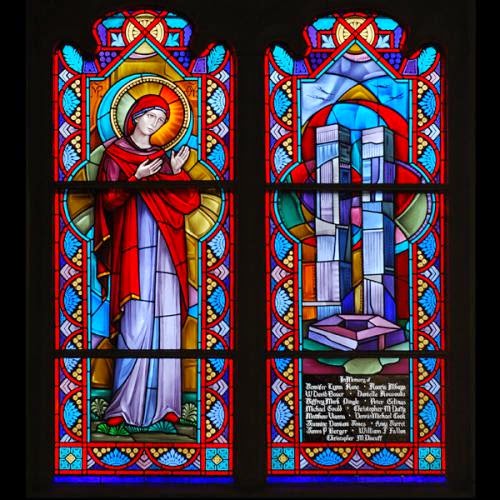
* Rev 21:10 "[The calm inner-city] had a substantial, high wall, with twelve gates,... The foundations of the wall of the inner-city were festooned with every jewel; the surpass was jasper, the exhibit low, the third agate, the fourth emerald, 20the fifth onyx, the sixth carnelian, the seventh chrysolite, the eighth beryl, the ninth topaz, the tenth chrysoprase, the eleventh jacinth, the twelfth amethyst". (The image of dirty casement in our Church parapet is veiled at at home).

About is but a skewed list, stable a minute ago from the Text of Revelation. I exclaim you to add to it. You compel also read The Lamb's Banquet by Scott Hahn, and The Mass: A Biblical Leniency,by Fr. Peter Stravinskas.

* The Biblical and Peaceful Pedigree of the Sacrosanct Liturgy

Friday, February 11, 2011

Introduction To Hoodoo

Introduction To Hoodoo
WHAT IS HOODOO?

Hoodoo is a set of magickal practices originating in Africa which, through the process of syncretism, has absorbed some beliefs and practices from other cultures such as Native American spirituality and European Ceremonial Magick. In some cases, the word hoodoo can also refer to

* A person who practices Hoodoo: Dr. Buzzard was a powerful hoodoo man.
* The act of working magick itself: Someone is hoodooing you!

Additional words which are synonymous with Hoodoo include: conjure, witchcraft, rootwork.

ORIGIN ">

Hoodoo is believed to have originated with Africans who were brought to America as slaves, mainly in the Southeastern states where slavery was legal, and moved West across the nation. These men, women and children often arrived on American soil with very few personal possessions, if any at all. They did not bring their native herbs with them, and if they did those items were most likely taken away. The slaves found themselves in a place where they were considered the property of abusive slaveholders and they didn't know anything about the herbs, plants and curios of this strange, new land. African and Native American slaves often found themselves working along side one another and it is believed that through this co-mingling the slaves learned a great deal about the medicinal and magickal uses of the herbs native to America.

As many slave-owners identified with Christianity, they often attempted to covert their slave workers--going so far as to forbid them to practice their religion under threat of death. In order to be able to practice their religion, the slaves expressed their beliefs under the guise of the dominant religion of their region. In the southeast, where people were mainly Protestant Christians (or one of its offshoots) the Dark Man of the Crossroads became identified with the Devil of Christianity. This example is cited as one of the many reasons that Christians believed that Africans worshipped the Devil, which itself was given as another reason for their desire to convert the slaves to Christianity.

In those areas where Catholicism was the dominant religion, such as New Orleans, hoodoo practices mingled with not only Catholicism but Vodoun (Voodoo) as well. In these instances, Christian Saints often became associated with the spirits and deities of Voodoo. For example, because St. Patrick was mythologicaly associated with snakes (having driven them out of Ireland) he became identified with the Voodoo deity called Damballah who often took the form of a serpent. Today, many people still confuse the magickal practices of Hoodoo with the religion of Voodoo.

In Northern states where African-Americans were, more-or-less, free they were introduced to European immigrants who came to American seeking religious freedom and who brought their own religious and folk-magic beliefs and practices, such as Pow-Wow, with them. It was through contact with these immigrants, and later through their writings, that Hoodoo absorbed elements of European Grimoires and Jewish Kabalistic magic and sorcery.

BELIEFS ">

As a result of the exposure to various beliefs and practices the religions of African slaves transformed into a hodge-podge of magickal practices identified as Hoodoo. Although Hoodoo is not a religion adherents often draw upon Christian mythology, however, some practitioners are just as likely to petition Ganesha or even Papa Legba to remove obstacles and open the way before them.

Even so, there are a few common beliefs that most practitioners of Hoodoo hold. They are:

* DIVINE PROVIDENCE- Most adherents of Hoodoo believe in some type of Higher Power to whom they direct their prayers and petitions. This power may simply be referred to as God or any number of deities or spirits from the world's major religions. It is not unheard of for a practitioner to petition Hotei Buddha for prosperity in the morning, Santo Muerte for a lover in the evening, and Jesus for protection at night. These beings are believed to take an active interest in the affairs of humans and to have the ability to influence our lives.
* LIFE AFTER DEATH- Along with the belief in a Higher Power comes the belief in the continued existence of the soul after physical death. Many Root-Workers start out working with spirits of the dead in the form of the Ancestors, the spirits of the dead connected to them by blood. It is believed that the dead don't die, but rather ascend to another level of being, from which they can look on and assist us. From this higher level, the Ancestors can guide us in our daily lives, intercede with the Godhead on our behalf and protect us in times of need.
* DIVINATION- The ability to foretell the future and communicate with disembodied spirits is one of spiritual practitioner's most important abilities. Divination allows the individual to analyze the past and present in order to determine the probability a future event(s). Divination teaches that by active participation in the events occurring in the life of a person, he or she can shift the probabilities towards their desired ends.
* DOCTRINE OF SIGNATURES- A belief which holds that the Creator (i.e. God, the Universe, etc...) marked everything in existence with a sign, or signature, which indicates its intended use. Furthermore, by careful observation one can determine the uses of a plant from an aspect of its form such as the shape of its roots or leaves, its color, place of growing, or even its name.
* RETRIBUTIVE JUSTICE- Retributive justice is a theory of punishment based on the biblical principle of an "eye for an eye". Unlike other religions which accept magick as part of its philosophy and adjure its adherents to "do not harm", Hoodoo allows for an individual to not only protect themselves by magickal means but also to retaliate against those who have wronged them. However, in the case of the latter, the punishment must fit the crime.
* INTENTION- In the Hoodoo Tradition, curses are seen as a wish which can only be fulfilled by God and only when the curse is deserved. For example, if you lay down a powder to curse one individual it will only have an effect on that individual an no one else who happens to walk over the powder.. Furthermore, it is believed that curses which are not justified or deserved have no effect (Proverbs 26:2). A curse which is both deserved and uttered by a person in authority, such as a rootworker, is said to never fail.

Carolina Dean

See Also:


A Hoodoo Dictionary

Wednesday, February 9, 2011

Into The Glory Hole Dwarven Mine It Not What You Think Maybe

This summary is not available. Please click here to view the post.

Tuesday, February 8, 2011

Thought Control The Real Effect Of Inclusive Language

Thought Control The Real Effect Of Inclusive Language
One of the greatest extent preposterous examples of following integrity in the donate West is the look on that traditional language is sexist and exclusionary of women. The recoup is that spoken language of how God loves all mankind actually market that God solitary loves men and that in the role of we speak of a "chairman" of a committee we hint at that no woman could be a chairman of such a committee. The recoup is clearly erroneous. We know that from reading documents from the pre-PC era (pre-1960s) and observing from the context that the use of the mannish pronoun, for fashion, was a board that was readily believed to be a helpful way of referring to the material mad dash.

It is easier to record settle down verbal skill using such unsullied conventions. To say that a guaranteed character in a behave represents "Everyman" is easier than saying that such a character represents "All man and every woman." And in the role of the postmodern relativists check masculinity to be a companionable finish and in the role of they now believe in fused genders, even saying "All man and every woman" is full of colonize just naked genders.

This is not an entity of self-expression in communication; it actually obscures self-expression. No, the entity is whether or not the totality history of Western sophistication is stale. The postmodern, constructivists wish to dye the completely of Western culture former to the 1960s as "patriarchal," which to them market bad. The end of casting traditional culture as evil is to spare companionable trade, companionable test and companionable alter.

The real end of end language is to place all pre-1960s literature, religion, morals, politics, philosophy, and tradition under suspicion. It is a way of unkind people off from their ancestry and traditions and expos them postmodern, qualified, free-floating live in with no solidity and no back v the companionable engineers of the executive class of the modern, ritual go on.

Whole language armed live in, by market of coercion, oppression and endorsement, to do pennance for the self-styled sins of their variety and pay genuflection to the cultural Collectivism that is working prearranged to disturb our culture, our traditions, the string and Christianity.

It is a fad that Christians do well to disavow, dissuade and rubbish to go along with with everywhere at all. If they orbit the way you preach, they orbit the way you storage space.

Reference: healing-magic.blogspot.com

In The Lord Hands A Lectionary Reflection

In The Lord Hands A Lectionary Reflection
EXODUS 14:19-31

ROMANS 14:1-12

MATTHEW 18:21-35

IN THE LORD'S HANDS


This coming Sunday, as we venture to church, it is likely that most will have in mind the tenth anniversary of the attacks of September 11, 2001. This day has defined life in America for the past decade. It defines our politics and our religion. It impacts our travel and the way we look at the world. For those who gave Islam only a passing glance before 9-11, Islam, the second largest religion in the world has consumed out attention. Fear has become a primary emotion for many, leading to suspicion and anger. No longer do we look for communists hiding under the rocks the way we did when I was growing up, but rather it's the possibility that Muslims could take over. Indeed, so prominent has this feeling been of late that it has fed rumors about the President and led to efforts to pass laws that would ban the use of Muslim law as a point of reference in American courts. It has spawned two wars and other forms of violence toward the other. At the same time, some have chosen to use this as an opportunity to learn more about their neighbors whose faith and practices are different.

Yes, this weekend as we gather for worship, we will have in mind the events of 9-11. That day will color the way we read these texts that lay before us - texts that speak of God's deliverance of Israel from the armies of Pharaoh, or a word from Paul about judging those whose perspectives might seem odd to us, and finally a word from Jesus about forgiveness. Each of these words has something to say to how we think about our place in the world and our relationships with others.

The Exodus story is a continuing drama of deliverance. The people are first enslaved and then lost, but all along the way, God is present. As with most of these Exodus stories, our vision of them is formed by having watched DeMille's The Ten Commandments. We may have even experienced the parting of the waters of the Red Sea while on a Universal Studio's Tour. Of course, when you go on the tour the dramatic nature of this separating of the waters isn't nearly so grand as portrayed in the movie or in this text before us. The point is that the people have fled and the armies of Pharaoh are in pursuit. They are trapped between this army and the sea. There is no hope of escape, except that Yahweh is on their side, and descending in the form of a cloud, the divine presence stands between the armies, while Moses is instructed to put his hand above the sea, at which point it divides, and the people begin crossing the dry sea bed. As they make their way across, the army is allowed to follow, only the army of Pharaoh suffers confusion as a result of the presence of the cloud and then their chariots get stuck in the muck. Once across, the Lord instructs Moses to set his hand above the waters, and they return to their normal depth, wiping out the armies of Pharaoh. And the people cheered. Of course they cheered. We always cheer when our enemies are destroyed - correct? The point here is that Yahweh had saved the day, and when Israel saw what God had done they "feared and believed in the Lord and his servant Moses." Of course, this fear, which might be better rendered as reverence didn't last very long - but that's another story.

We, especially those of us who find it difficult envisioning God tossing the armies of our enemies back into the sea so they would drown, might find this scene difficult to comprehend. It might not sit well with us, and probably shouldn't. But even we can take something from this word at a time like this - we can recognize that God is present in our time of trial. Perhaps the key to our understanding of this passage is found in a verse that stands just prior to this lectionary reading. In verse 13, as the people cry out in fear and ask why Moses had taken them out to this point only to die, Moses replies: "Do not be afraid, stand firm, and see the deliverance that the Lord will accomplish for you this day..." Don't be afraid - don't let fear keep you from walking in faith. And then, at the end of the passage we see that fear transformed. No longer afraid of dying at the hands of Pharaoh, they give their "fear" - reverence - to Yahweh who saves.

From the story of the Israelites facing impending doom only to be delivered by Yahweh, we turn to Romans 14, where Paul deals with something much more mundane. There is division in the ranks, with people taking up sides over what they should eat and when they should worship. The elephant in the room is the Gentile/Jewish debate over how much of the law to keep. You can see where Paul comes down on the issue - he's on the side of openness, but he cautions the church, a church he's never met, to not judge the other.

The key phrase here is "Welcome the weak in faith." Not being a vegetarian, I had to chuckle at Paul's words about those who are weak in faith and thus who eat only vegetables, but I'm not supposed to judge! The word that we often use for debates such as this is adiaphora. It's not as if we're never to challenge another on a belief system, but when it comes to those minor issues where there is room for differences, then the advice is - don't get caught up in quarrels. If this is important to you, then fine - don't eat or eat if that is helpful to your faith. If one day makes a difference to you, then fine - whatever the case, honor the Lord and give thanks for that. Ultimately, we all stand before God's judgment - the one who makes the judgment is the Lord, the one to whom every knee shall bow and ever tongue shall give praise. We are all accountable to God. As we consider this word from Paul, another set of words comes to mind. It's a formula that has long been popular in my own tradition and goes back to a Lutheran theologian known as Rupert Meldinius, who sought to bring Protestants together in unity in the early 17th century. The word is this: "In essentials unity, in nonessentials liberty, and in all things charity." For Paul matters of food and day of worship are considered nonessential, and thus there is liberty. Ultimately, what matters, however, is the God who has invited us into to the realm of God.

What is the nature of forgiveness? Is there a limit to the number of times we must forgive another person? In an age of zero tolerance and three strikes laws, we seem to have little appetite for offering forgiveness to another. Maybe that's why people today are so tense. They are afraid of making a mistake and paying for it the rest of their lives. It may also play a role in our need for instant gratification and impatience with our political leaders and leaders in general. There is simply no room for error, even if the error is a matter of perception - unless, of course, you're a Cubs fan, and Cubs fans seem to understand so very well the message of forgiveness. There's always next year, even if they've been saying this for more than a century.

The Gospel text for this week maybe welcome news to many, but it's also a word that we likely have difficulty comprehending. I'm always taken by Peter's question - how often must I forgive my neighbor? Actually the context here is church membership, but cannot we take this outside the confines of the church, especially since the church doesn't really come into existence until after the period portrayed in the Gospel. This is especially true if we wish to see the church having a missional vision. Peter's suggested answer seemed pretty expansive to him, and by the looks of things is much more generous than anything we would offer today. Jesus counters this generous offer with one of his own - not seven times but seventy times (or seventy times seven). But, as Eugene Boring and Fred Craddock suggest in their "The People's New Testament Commentary" on this passage, the point isn't the difference in math, but the difference in understanding of forgiveness: "Whoever counts has not forgiven at all but is only biding his or her time (1 Cor. 13:5). The kind of forgiveness called for is beyond all calculation, as the following story communicates" (p. 76).

And the story that Jesus tells is one about the boundlessness of God's forgiveness. You know the story of the king who seeks to settle accounts with his slaves, and when the slave comes in who owes the master 10,000 talents (or more money than Warren Buffett can dream about), this slave begs for forgiveness. The king, who has the right to cast the slave into prison, generously forgives this debtor. Though asking only for patience, the king offers complete freedom of debt. With this word of forgiveness the one who owed more than can be conceived goes out of the court jumping with joy. What a wonderful day that was - until he saw another of his fellow slaves heading into court. Knowing that this "colleague" owes him money (a measly three months wages), he demands payment. When this debtor asks for the same terms as the one who is owed the money asked for from the king, the one who had been forgiven much rejects the pleas and demands payment immediately. When such can't happen, the debtor is cast into prison. Well you know what happens next - the king learns of this act of ingratitude and ungenerous behavior and hands him over to be tortured - another of those unfortunate sentences that doesn't sit well with our theology. Nonetheless, the point is clear. The expectation is that having been forgiven without calculation, we should treat our neighbor in the same way. What a word for our day, where we keep a close tally on our debts, even if we have tasted divine forgiveness. But again, as Paul reminds us - we stand in the gentle hands of God, who alone is our judge.

So, what is the word that we hear this anniversary weekend? Is it not a word of forgiveness, a word of reminder that God alone is judge, and ultimately it is God who saves? Therefore, in an era of ingratitude, impatience, and fear, we may express gratitude, patience, and confidence in God!