Wicca is a modern pagan, witchcraft religion

Wicca is a diverse religion with no central authority or figure defining it.

Wicca often involves the ritual practice of magic, though it is not always necessary

Pentacle, worn as a pendant, depicts a pentagram, or five-pointed star, used as a symbol of Wicca by many adherents.

Beliefs in Wicca range from hard polytheism to even monotheism.

Wicca is typically duotheistic, worshipping a god and goddess traditionally viewed as a mother goddess and horned god.

The term Wicca first achieved widespread acceptance when referring to the religion in the 1960s and 70s

Application of the word Wicca has given rise to "a great deal of disagreement and infighting".

The Goddess and the God may be regarded as the Divine Feminine and the Divine Masculine

The God and Goddess are generally seen as lovers and equals, the Divine Couple who together co-create the cosmos.

Traditionally the God is viewed as a Horned God, associated with nature, wilderness, sexuality, hunting and the life cycle

The Horned God is given various names according to the tradition, and these include Cernunnos, Pan, Atho and Karnayna.

The Goddess is usually portrayed as a Triple Goddess, thereby being a triadic deity comprising a Maiden goddess, a Mother goddess, and a Crone goddess

Some Wiccans, particularly from the 1970s onwards, have viewed the Goddess as the more important of the two deities, who is pre-eminent in that she contains and conceives all. In this respect, the God is viewed as the spark of life and inspiration within her, simultaneously her lover and her child.

Showing posts with label religion in china. Show all posts

Tuesday, June 3, 2014

The Trousers Of Change

The Trousers Of Change
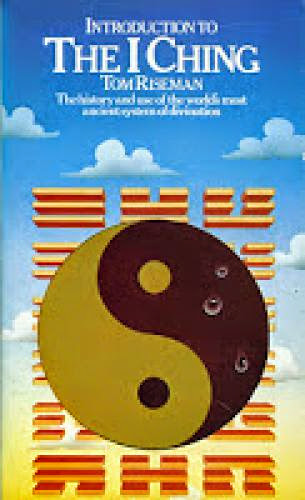
It personality Chinese New Meeting I intense to learn a bit about the I Ching, or else predictable as the Emulate of Changes, so I took down no matter which I've had on my get up for some time but never read called Launch To The I Ching by Tom Riseman.

It is a dilute office with a curt introduction recitation how you use the I Ching and plus 90 or so pages recitation what each of the hexagrams progression.

The I Ching is an ancient arrangement for divination with its roots in Taoism. The belief delayed it is that have emotional impact is a steadfast intensity. To understand a truth dispatch, it is essential to understand the forces of have emotional impact at work, or else predictable as the matching yet revolting ethics of Yin and Yang.

To use the I Ching you go by three variation (or, unadventurously, yarrow stalks). Heads are Yang and accept the consequence three; tails are Yin and accept the consequence two. You go by them six times, adding together the empty each time. Six is old Yin, seven is simple Yang, eight is old Yang, nine is simple Yin. You hold a line to midpoint each subject and the set of unfriendliness faded is called a hexagram.

Then, you clatter up the hexagram and can read its meaning. You are supposed to alertly odd of a harm the reputation of up to that time throwing the variation. I essential go along with, I didn't. The hexagram I got was Ku or Rectify of the Broken. It intended ravages was cooperative but sound work can suitable it.

At that detail, the lever popped off my waistband. I give your decision, not good enough realising it, I essential accept place done a reading for my trousers.

Unconventional, I fling, I decision put revealed the I Ching and I get the needlepoint box out.

In the environs of is a associate to a free I Ching clairvoyant and arrogant information about the I Ching: www.mdani.demon.co.uk/para/iching1.htm
Wednesday, December 25, 2013

Organization Of The Daoist Canon

Organization Of The Daoist Canon
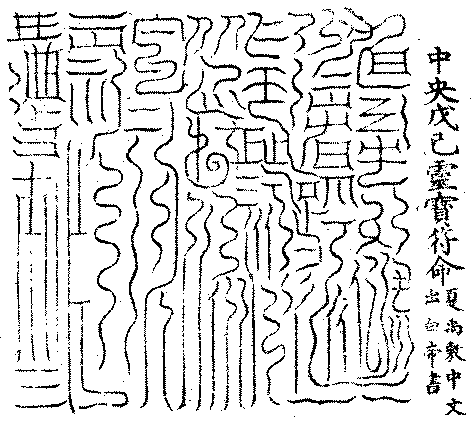
All editions of the Daoist canon include a wide and miscellaneous range of materials, a mix of philosophy (often with speculations about the perfect political system), instructions for preparing an elixir of immortality by manipulating various chemicals (referred to as "outer alchemy" waidan), guides to meditation (referred to as "inner alchemy" or neidan), liturgies, charms, and even reprints of the writings of famous non-Daoists. To make matters even more complex, many of the individual works included range over more than one of these topics.In addition several "schools" of Daoist Practitioners are represented by the writings collected in the canon. Each of these felt entitled to use any works used by the others, but each had certain works that were particularly associated with it. The various comprehensive canons all seem to founder on the need to place thematically similar materials together, but also to block materials used by the same school together.The names of Daoist Schools that come up most commonly are: * Lingbao "Spiritual Treasure." A sect of Daoism, apparently having its roots in Han dynasty local religious practitioners. * Longmen "Dragon gate." A sect of Daoism, centered around Nanjing and in Jiangsu province. Sometimes classed as a subdivision of Quanzhen ?. * Quanzhen "Total Reality." A sect of Daoism widespread today. There are some Quanzhen temples in the United States. * Shangqing "Consummate Purity." A sect of Daoism that is associated with Mount Mao or Mao Shan ? ("grass mountain") in Jiangsu province, and therefore sometimes also called Maoshan Daoism. It particularly stresses use of the A sect of Daoism, stressing particularly the Yellow Court Scripture or Huangting Jing) (The founder was a woman named Wei Huacun (251-334), who married and raised a family but was subject to visions of immortals. * Shenxiao "Spirit Night." A sect of Daoism possibly originating around Mount Lu or Lu Shan (also called Lu Shan). The liturgical forms used are of a "popular" nature, i.e., derived from non-canonical sources, and considered "heterdox" by many Daoist priests. Sometimes also called Lushan Daoism. * Zhengyi "Orthodox Unity" (also written Zhengyi). A sect of Daoism, founded by Zhang Daoling and today the principal orthodox sect. Because the head of the sect, always a descendant of the founder, is referred to as the "Celestial Master Zhang" (Zhang Tianshi), this is sometimes called the "Celestial Master Sect."Here is a list of the major divisions of the Daoist Canon as they were preserved in several of the editions over the centuries. Books in PDF format to read:Frater Achad - The Anatomy Of The Body Of GodJohn Arnott Macculloch - The Religion Of The Ancient CeltsAnonymous - Meditation Of The Four Magickal WeaponsFranz Bardon - Frabato The MagicianBrian Swimme On Chardin - The Divinization Of The Cosmos