



People in the western Carpathian Mountains and other parts of Romania celebrate the S^anziene holiday annually, on June 24. This is similar to the Swedish Midsummer holiday, and is believed to be a pagan celebration of the summer solstice in June. According to the official position of the Romanian Orthodox Church, the customs actually relate to the celebration of Saint John the Baptist's Nativity, which also happens on June 24.
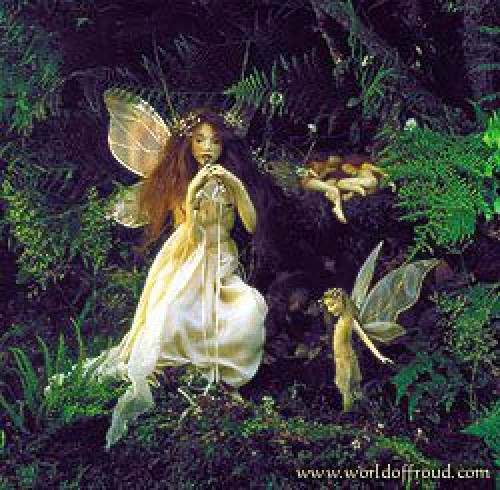
The folk practices of S^anziene imply that the most beautiful maidens in the village dress in white and spend all day searching for and picking Galium verum. They are instructed to remain alone and unseen, especially by any males. Using the flowers they picked during the day, the girls create wreaths as floral crowns which they wear upon returning to the village at nightfall. They are then supposed to have turned into s^anziene fairies, and dance in circle around a bonfire, into which all remains of the previous harvest are thrown. People are prevented from speaking to the girls during this ceremony, as it is presumed that the s^anziene spirits possessing them might otherwise be angered or distracted.
In some regions, the girls may keep the wreaths until the following year's S^anziene. This, they believe, ensures a fertility for their family's land. In addition, if they place the wreath under their pillow the night right after S^anziene, it is possible that they would have a premonition of the man they are to marry (ursitul, "the fated one"). Another folk belief is that during the S^anziene night, the heavens open up, making it an adequate time for making wishes and for praying, as God is more likely to listen.
In some areas of the Carpathians, the villagers then light a big wheel of hay from the ceremonial bonfire and push it down a hill. This has been interpreted as a symbol for the setting sun (from the solstice to come and until the midwinter solstice, the days will be getting shorter).
In cultural referenceThe consequences of heavens opening on S^anziene are connected by some to paranormal events reported during that period of each year. According to popular beliefs, strange things, both positive and negative, may happen to a person wandering alone on S^anziene night. Strange ethereal activities are believed to happen especially in places such as the Baneasa forest (near the capital of Bucharest) or the Baciu forest (near the city of Cluj-Napoca).


