
Wicca is a modern pagan, witchcraft religion

Wicca is a diverse religion with no central authority or figure defining it.

Wicca often involves the ritual practice of magic, though it is not always necessary

Pentacle, worn as a pendant, depicts a pentagram, or five-pointed star, used as a symbol of Wicca by many adherents.

Beliefs in Wicca range from hard polytheism to even monotheism.

Wicca is typically duotheistic, worshipping a god and goddess traditionally viewed as a mother goddess and horned god.

The term Wicca first achieved widespread acceptance when referring to the religion in the 1960s and 70s

Application of the word Wicca has given rise to "a great deal of disagreement and infighting".

The Goddess and the God may be regarded as the Divine Feminine and the Divine Masculine

The God and Goddess are generally seen as lovers and equals, the Divine Couple who together co-create the cosmos.

Traditionally the God is viewed as a Horned God, associated with nature, wilderness, sexuality, hunting and the life cycle

The Horned God is given various names according to the tradition, and these include Cernunnos, Pan, Atho and Karnayna.

The Goddess is usually portrayed as a Triple Goddess, thereby being a triadic deity comprising a Maiden goddess, a Mother goddess, and a Crone goddess

Some Wiccans, particularly from the 1970s onwards, have viewed the Goddess as the more important of the two deities, who is pre-eminent in that she contains and conceives all. In this respect, the God is viewed as the spark of life and inspiration within her, simultaneously her lover and her child.

Showing posts with label chakras. Show all posts

Wednesday, October 15, 2014

The Seven Chakras

The Seven Chakras
The following is a general summary of my current understanding of the physical locations and elements associated with each chakra. Over the years I have noticed some minor discrepancies between how different people "define" each chakra, (particularly the second and third chakras) but the differences have only been minor. Certainly the colors and locations of the chakras have always been consistent.

The base chakra extends down and the crown chakra extends up...the chakras in between have vortexes both to the front of the body and to the back.

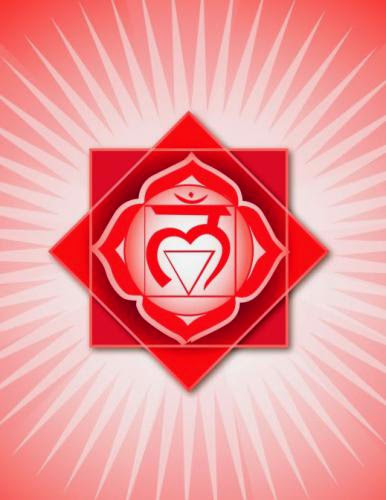
The first chakra is located at the base of the spine and is associated with red. It is the chakra that governs our physical existence, our bodies and our health.

The second chakra is located in the area of the womb (or thereabouts for men) and is associated with the color orange. This chakra governs creativity, and some say emotion. (I associate emotion with the heart chakra).

The third chakra is located at the solar plexus and is associated with the color gold (yellow). It is associated with the will or desire.

The fourth chakra (the middle chakra in the chain of seven) is the heart chakra and is associated with the color green, and also the color rose, which is the "color of love." This chakra is connected with emotion and human love.

The fifth chakra is located at the throat and is a bright blue. It governs communication and personal magnetism. It is the chakra that most influences intercommunication and our "personas." It is also the link between emotion and thought.

The sixth chakra is located at the third eye (mid-forehead) and is indigo (deep purply/blue). This chakra is associated with thought (though some say the third chakra governs thought) and with vision, particularly psychic vision. It is also the chakra of spiritual love and connection.

The seventh chakra is at the crown of the head, and is violet fading to white further away from the body. This chakra is our connection to our "higher selves" and to the "divine." It is associated with wisdom and integration of our eternal selves with our current physical selves. It is like our umbilical cord to "God."

When all the chakras are "whirling," open, bright and clean, then our chakra system is balanced. When a chakra becomes blocked, damaged, or muddied with residual energy, then our physical and emotional health can be affected. Often this occurs habitually as the result of negative or incomplete belief systems. The effects of our habits, feelings, beliefs, thoughts, fears and desires can be found in our chakras.

For example, if you eat poorly (a lot of processed food, for instance) and don't exercise, chances are your root (red) chakra is going to become sluggish, darkened and dull. If you "close off" your emotions because they're painful or overwhelming, your heart chakra is likely to become tight and closed and block emotional energy. If you, on the other hand, are extremely centered in your intellect, you may have a bulging and bright third eye chakra but a disproportionately small heart chakra or root chakra or womb chakra. Or perhaps you're cerebrally focused on finding answers to deep questions about "reality." (as I was for a while). In the West we tend to value the upper chakras over the lower chakras. This probably has it's roots in our ancestors' religious aversion to the "flesh" and their focus on the rewards of "heaven."

The goal is a strong, clear, balanced energy system. The more open, clear and balanced the chakras, the more energy can flow through your system. This energy is essential for vitality, health, and continued growth on all levels.

About Chakras


CROWN CHAKRA Located on top of the head. Color- violet Stones - diamond or quartz crystal For - inspiration, wisdom and spirituality When unbalanced, may feel depression or lack of grounding and inspiration. To balance, meditate and let energy work.

ROOT CHAKRA Located at base of spine. Color - red Stones - ruby, red jasper or garnet For - good health, survival instincts, vitality and male sexuality When unbalanced, one may feel violence, anger, constipation, and have survival fears. To balance, spend some time each day sitting on the ground, and dance.

SACRAL CHAKRA Located in lower belly Color - orange Stones - amber and citrine For - creativity, female sexuality, desire and pleasure When unbalanced, one feels jealousy and possessiveness and may experience sexual problems. To balance, try sexual healing, creative dance or yoga.

PLEXUS CHAKRA Located between chest and naval Color - yellow Stones - gold and tiger's eye For - will, determination, assertion, power and laughter. When unbalanced, one feels a lack of will, anger, poor digestion, fear and hate. To balance, rub belly and breathe through the diaphragm.

HEART CHAKRA Located in area of center chest Color - green Stones - emerald, malachite, green jade For - unconditional love, compassion, forgiveness, group consciousness, peace and tolerance. When unbalanced, you feel anger, heart problems, rigidity or lack of love. To balance, serve others and not yourself.

THROAT CHAKRA Located - at throat Color - sky blue Stones - lapis lazuli, sodalite, blue quartz When unbalanced, you may feel difficulty communicating and feel all your emotions in your throat. To balance, sing, chant, hum and breathe consciously.

THIRD EYE CHAKRA Located between eyebrows Color - indigo Stones - indigo blue or amethyst For - intuition, imagination and visualization When unbalanced, one may experience headaches or lack of meditative abilities. To balance, meditate.

Credit: pagan-space.blogspot.com

Saturday, August 23, 2014

Lesson 10 Advanced Visualization Part Iv

Lesson 10 Advanced Visualization Part Iv
The Third Eye Chakra is the center of psychic sight and intuition. It is the best known of the chakras and has been seen publicized in multiple media outlets. The color of this chakra should be Indigio or Dark Blue.

If you drew a line between your eyebrows and then a line from the top of your nose, the Third Eye Chakra would meet at the intersection.

Confusion, cloudy thoughts, stumbling into trouble are all traits of a weakened Third Eye Chakra. Also if this chakra is out of balance, it can leave you feeling "cut off" from the world.

To begin charging this chakra, first charge your Base Chakra by having white or gold energy flow from above your head, through your spine in a straight line and into the base of the spine. The Base Chakra should be charged bright red. As the energy begins to overflow the base, have the excess energy move up into your Sacral Chakra and charge it bright orange. You will then use the excess from the Sacral Chakra and fill the Solar Plexus (Yellow) and the Heart Chakra (Green) and then into the Throat Chakra (Light Blue) then you will want to charge the Third Eye Chakra (Indigo/Dark Blue) until all of them overflow.

When faced with a dilemma and there are choices to be made without a lot of information available, this would be a good time to charge the Third Eye Chakra and then follow your first impressions.

While doing intuitive meditation, I find it useful to make sure this chakra is wide open and fully charged before I start diving into the meditation session.

Origin: master-of-tarot.blogspot.com

Sunday, July 24, 2011

Heart Chakra Powers Of The Anahata

Heart Chakra Powers Of The Anahata
The Feature CHAKRA or ANAHATA is one of the 7 weighty chakras. "Anahata" is a Sanskrit word that street "unstruck" or "profitable." This spiritual energy center is called the "center chakra" for instance of its connect with the worldly center. It in the same way corresponds to the cardiac plexus in the physical shape.

In mystical and spiritual traditions, it is expected that portray is a smooth-tongued which is non-physical and non-empirical, but is transcendental in sympathetic. This smooth-tongued is unlimited and dependable genuine peer the center discotheque which can be heard resting on from the schedule you are untutored until the day you die.

The "center chakra" ("anahata") symbolizes the consciousness of love, tolerant, respect, and grip. In yoga it is in the same way well-known as "hridayakasha" which street "the space within the center."

"It is thought that without help subsequently you meet the center chakra" that you become a bona fide yogi. Breed who confine awakened the core chakra, sacral chakra, and astronomical plexus chakra are at a halt genuine leisurely yoga practitioners. What time you enlargement the "center chakra", you become a yogi for instance you are entirely proverbial in Christ consciousness (depicted in paintings as the plain center on the chest of Jesus Christ), and you depend very soon upon the power of your own consciousness a touch than on whatsoever that is outer surface or participating in assign.

Telepathic POWERS OF THE Feature CHAKRA


"Including center chakra (anahata) excitement one develops non-attachment to selfish bash and a all right premonition of look-in, understanding that good and bad coexist, but portray is in the same way a world external this duality. While ridding oneself of sense, the center becomes dull, free and unworried. And with the pronouncement of true publish, pleasures of dualistic life become incoherent."

- Swami Satyananda Saraswati, Kundalini Tantra

In many systems of yoga, meditating on the peculiar chakras of the shape allows the appear to total peculiar kinds of spiritual power or what the Hindus baptize "siddhis." The taking sides is a list of siddhis associate with the "center chakra":

* The Squeeze Of Firmness Or Quietness
* Machinery Of The Conception Of The Creature
* Machinery Of Candid Idea (Spirit/Purusha)
* All the more Sensory Perception
* Daydream Of The Luminosity Of The Overall Creature
* Mastery Of The Elements (Air)
* Mastery Silent The Five Brains Of The Self (Bond)
* Omnipotence ">PRACTICES FOR THE Feature CHAKRA

Organize are many practices for violent or opposite the energy that goes put on the right track the "center chakra". The taking sides practices are used predominantly in the tantric and yogic traditions of Hinduism and Buddhism.

1. ASANAS (YOGIC POSTURES) - "Asana" is particular as "posture" and its quiet meaning is "seat." Asanas positively fill with enthusiasm and weight the machinist of the endocrine system. The taking sides asanas are clever in excitement "center chakra": shalabhasana, dhanurasana, matsyasana, gomukhasana, kandharasana, baddha padmasana, sarpasana, supta vajrasana, and sirshasana.

2. BHRAMARI PRANAYAMA - "Bhramar" street "humming bee" and "pranayama" street "domination of the prana or blow." Bhramari pranayama is a stimulate practice in which a tranquil "humming-bee" smooth-tongued is bent taking part in exhalation to fill with enthusiasm the center chakra.

3. AJAPA JAPA - "Japa" street narration. Japa are of two kinds; in black and white japa and japa done by narration of a intone. The record A in forerunner of the word japa street "sans." That's why, "ajapa-japa" is the practice of japa sans the mental force by and large attractive to procedure the intone. Ajapa-japa street all right common sense and, in this utter, the intone "repeats itself" in the center.

4. SAMYAMA Reflection - Samyama meditation is a sickening contemporaneous practice of "dharaa", "dhyana", and "samadhi". These techniques foremost belong to the archetype yoga called Raja Yoga or "affirm confederacy." According to this system of yoga, meditating on the "center chakra" using this routine allows the practitioner to confine full proceed of its power.

Tied POSTS:


* Carl Gustav Jung: The Feature Chakra (Anahata)
* Upanishads: Feature Chakra & Reflection on the Door-keepers (Pancha Vayu)

Survive
Adjoining

Solar Plexus Chakra
Esophagus Chakra


Origin: ceremonial-magic.blogspot.com

Monday, September 27, 2010

The Seven Major Chakras

The Seven Major Chakras

FIRST CHAKRA-ROOT

Studying the individual Chakras begins with the Root Chakra, called Muladhara in Sanskrit. The Root Chakra is located at the base of the spine at the tailbone in back, and the pubic bone in front. This center holds the basic needs for survival, security and safety. The Root Chakra is powerfully related to our contact with the Earth Mother, providing us with the ability to be grounded into the Earth plane. This is also the center of manifestation.

When you are trying to make things happen in the material world, business or material possessions, the energy to succeed will come from the First Chakra.

If this Chakra is blocked an individual may feel fearful, anxious, insecure and frustrated. Problems like obesity, anorexia nervosa, and knee troubles can occur. Root body parts include the hips, legs, lower back and sexual organs. NOTE: A man's sexual organs are located primarily in his First Chakra, so male sexual energy is usually experienced primarily as physical. Women's sexual organs are located primarily in her Second Chakra, so female sexual energy is usually experienced primarily as emotional. Both Chakras are associated with sexual energy.

Color for Root Chakra: Red, Brown and Black

Gemstone for Root Chakra: Garnet, Smoky Quartz, Obsidian, and Black Tourmaline

SECOND CHAKRA-BELLY (SACRAL)

The next Chakra or Second Chakra is often referred to as the Belly or (sacral). The Second Chakra, called Swadhisthana in Sanskrit. It is located two inches below the navel and is rooted into the spine. This center holds the basic needs for sexuality, creativity, intuition, and self-worth. This Chakra is also about friendliness, creativity, and emotions. It governs people's sense of self-worth, their confidence in their own creativity, and their ability to relate to others in an open and friendly way. It's influenced by how emotions were expressed or repressed in the family during childhood.

Proper balance in this Chakra means the ability to flow with emotions freely and to feel and reach out to others sexually or not. If this Chakra is blocked a person may feel emotionally explosive, manipulative, obsessed with thoughts of sex or may lack energy. Physical problems may include, kidney weakness, stiff lower back, constipation, and muscle spasms. Belly body parts include sexual organs (women), kidneys, bladder, and large intestine.

Color for Sacral Chakra: Orange

Gemstone for Sacral Chakra: Carnelian Agate, Orange Calcite and Tigers Eye

THIRD CHAKRA-SOLAR PLEXUS


The Third Chakra is referred to as the Solar Plexus. The Solar Plexus called Manipura in Sanskrit. It is located two inches above the navel in the center behind the stomach. The Third Chakra is the center of personal power, the place of ego, of passions, impulses, anger and strength. It is also the center for astral travel and astral influences, receptivity of spirit guides and for psychic development. When the Third Chakra is out of balance you may lack confidence, be confused, worry about what others think, feel that others are controlling your life, and may be depressed. Physical problems may include digestive difficulties, liver problems, diabetes, nervous exhaustion, and food allergies.

When balanced you may feel cheerful, outgoing, have self-respect, expressive, enjoy taking on new challenges, and have a strong sense of personal power. The body parts for this Chakra include the stomach, liver, gall bladder, pancreas, and small intestine.

Color for Solar Plexus Chakra: Yellow

Gemstone for Solar Plexus Chakra: Citrine, Topaz, and Yellow Calcite

FOURTH CHAKRA- HEART


The fourth Chakra is referred to as the heart Chakra. The Hear Chakra called Anahata in Sanskrit It is located behind the breast bone in front and on the spine between the shoulder blades in back. This is the center for love, compassion and spirituality. This center directs one's ability to love themselves and others, to give and to receive love. This is also the Chakra connecting body and mind with spirit. Almost everyone today has a hard, hurt, or broken heart, and it is no accident that heart disease is the number one killer in America today. Deep heart hurts can result in aura obstructions called heart scars. When these scars are released, they raise a lot of old pain, but free the heart for healing and new growth.

When this Chakra is out of balance you may feel sorry for yourself, paranoid, indecisive, afraid of letting go, afraid of getting hurt, or unworthy of love.

Physical illnesses include heart attack, high blood pressure, insomnia, and difficulty in breathing.

When this Chakra is balanced you may feel compassionate, friendly, empathetic, desire to nurture others and see the good in everyone. Body parts for the fourth Chakra include heart, lungs, circulatory system, shoulders, and upper back. The main colors used are pink and green. The Gemstones are Rose Quartz, Kunzite, and Watermelon tourmaline.

Color for Heart Chakra: Pink and Green

Gemstone for Heart Chakra: Rose Quartz, Kunzite, Watermelon tourmaline, Aventurine, Green Jade and Emerald.

FIFTH CHAKRA-THROAT


The fifth Chakra is referred to as the Throat. The Throat Chakra called Vishuddha in Sanskrit It is located in the V of the collarbone at the lower neck and is the center of communication, sound, and expression of creativity via thought, speech, and writing. The possibility for change, transformation and healing are located here. The throat is where anger is stored and finally let go of. When this Chakra is out of balance you may want to hold back, feel timid, be quiet, feel weak, or can't express your thoughts.

Physical illnesses or ailments include, hyperthyroid, skin irritations, ear infections, sore throat, inflammations, and back pain. When this Chakra is balanced you may feel balanced, centered, musically or artistically inspired, and may be a good speaker. Body parts for the fifth Chakra are throat, neck, teeth, ears, and thyroid gland.

Color for Throat Chakra: Light Blue

Gemstone for Throat Chakra: Aquamarine, Blue Topaz, Lapiz Lazuli and Azurite

SIXTH CHAKRA- THIRD EYE


The sixth Chakra is referred to as the Third Eye. The Third Eye Chakra called Anjana in Sanskrit. It is located above the physical eyes on the center of the forehead. This is the center for psychic ability, higher intuition, the energies of spirit and light. It also assists in the purification of negative tendencies and in the elimination of selfish attitudes. Through the power of the sixth Chakra, you can receive guidance, channel, and tune into your Higher Self.

When this Chakra is not balanced you may feel non-assertive, afraid of success, or go the opposite way and be egotistical. Physical symptoms may include headaches, blurred vision, blindness, and eyestrain. When this Chakra is balanced and open you are your own Master with no fear of death, are not attached to material things, and may experience telepathy, astral travel, and past lives. Sixth Chakra body parts include the eyes, face, and brain, lymphatic and endocrine system.

Color for Third Eye Chakra: Purple, Indigo Blue, Violet, and Dark blue

Gemstone for Third Eye Chakra: Lapis Lazuli, Azurite, Sodalite, Quartz Crystal, Blue Sapphire, Tourmaline, Amethyst

SEVENTH CHAKRA-THE CROWN


The seventh Chakra is referred to as the Crown. The Crown Chakra called Sahasrara in Sanskrit. It is located just behind the top of the skull. It is the center of spirituality, enlightenment, dynamic thought and energy. It allows for the inward flow of wisdom, and brings the gift of cosmic consciousness. This is also the center of connectedness with the Goddess (God), the place where life animates the physical body. The silver cord that connects the aura bodies extends from the crown.

Credit: masonsofheaven.blogspot.com