

Wicca is a modern pagan, witchcraft religion

Wicca is a diverse religion with no central authority or figure defining it.

Wicca often involves the ritual practice of magic, though it is not always necessary

Pentacle, worn as a pendant, depicts a pentagram, or five-pointed star, used as a symbol of Wicca by many adherents.

Beliefs in Wicca range from hard polytheism to even monotheism.

Wicca is typically duotheistic, worshipping a god and goddess traditionally viewed as a mother goddess and horned god.

The term Wicca first achieved widespread acceptance when referring to the religion in the 1960s and 70s

Application of the word Wicca has given rise to "a great deal of disagreement and infighting".

The Goddess and the God may be regarded as the Divine Feminine and the Divine Masculine

The God and Goddess are generally seen as lovers and equals, the Divine Couple who together co-create the cosmos.

Traditionally the God is viewed as a Horned God, associated with nature, wilderness, sexuality, hunting and the life cycle

The Horned God is given various names according to the tradition, and these include Cernunnos, Pan, Atho and Karnayna.

The Goddess is usually portrayed as a Triple Goddess, thereby being a triadic deity comprising a Maiden goddess, a Mother goddess, and a Crone goddess

Some Wiccans, particularly from the 1970s onwards, have viewed the Goddess as the more important of the two deities, who is pre-eminent in that she contains and conceives all. In this respect, the God is viewed as the spark of life and inspiration within her, simultaneously her lover and her child.

Showing posts with label ancient history. Show all posts

Saturday, May 17, 2014

More On Hypatia And Christians And Atheists And Ptolemaic Science

More On Hypatia And Christians And Atheists And Ptolemaic Science
A lot of the stuff on Hypatia out there on teh interwebs is (surprise!) misinformed, misleading or just out and out disinformation. A lot of this is due to Christians desperately trying to rewrite history. Also, the portrayal of Hypatia in the film Agora, while sympathetic after a fashion, is more fiction than fact -- and that is largely due to the fact that Alejandro Amen'abar's atheism is nearly as hostile to Hypatia's Paganism as Christianity is.

Anyway, here are a few links that won't steer you too far wrong:

* YPATIA OF ALEXANDRIA (a mathematician's appreciation of Hypatia)
* HYPATIA OF ALEXANDRIA: MATHEMATICIAN, ASTRONOMER, AND PHILOSOPHER (from the Alexandria Journal folks)
* HYPATIA, ANCIENT ALEXANDRIA'S GREAT FEMALE SCHOLAR (Smithsonian Magazine)
* HYPAT'iA OF ALEXANDRIA: PAGAN PHILOSOPHER, SCIENTIST, MATHEMATICIAN, AND CIVIC LEADER (Max Dashu)
* SYNESIUS OF CYRENE (includes extensive collection of Synesius' writings)
* "HYPATIA OF ALEXANDRIA: MATHEMATICIAN, ASTRONOMER, AND PHILOSOPHER" an article by Nancy Nietupski published in Number 2 of the Alexandria Journal, starting on page 57.
* HYPATIA: THE MARTYR OF PAGANS AND THE FEMINIST MOVEMENT (a somewhat idiosyncratic site hosted at polyamory.org)

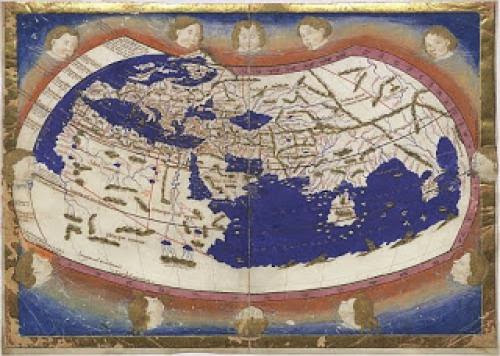
One of the worst thing about the film "AGORA" is the way in which the scientific achievements of ancient Pagandom are inexcusably distorted to fit Amenabar's atheist agenda. Anyone interested in actually understanding the tremendous accomplishments and intellectual sophistication of ancient Pagan science should check out Andrew Barker's study "SCIENTIFIC METHOD IN PTOLEMY'S HARMONICS". In that work, and as the title implies, Barker argues that in his "Harmonics", Ptolemy "announces and seeks to justify at the outset a sophisticated set of procedural principles which scientists in this field, so it argues, must follow if they are to produce defensible results." [p. 1] Barker goes on to say that:"The complex combination of rationalism and empiricism which Ptolemy professes to adopt insists, among other things, on a crucial role for experimental tests of provisional theory-based results. Here, as we shall see, the word 'experimental' is to be construed in a strict sense that will seem surprisingly modern. I hope to show beyond a reasonable doubt that Ptolemy understood very well what conditions must be met if experimental tests are to be fully rigorous, and that he had a clear and persuasive conception of the roles they should be assigned in a well conducted scientific project."

[p. 2]In other words far from being simply an authority figure whose views were accepted uncritically, Ptolemy was an outspoken proponent for open ended scientific research in the full modern sense. This is precisely the opposite of the view of Ptolemaic science that is presented in "Agora".

[This is a follow up to the post: Hypatia (Honoring Our Pagan Ancestors, Part Two).]
Saturday, April 19, 2014

History Mystery Carthage Gateway To Rich Western Trade 1

History Mystery Carthage Gateway To Rich Western Trade 1
Ancient Carthage was once Rome's most dangerous rival, but the Phoenician city perished in a single orgy of destruction, leaving barely a trace of a powerful civilization that embraced both high culture and horrific ritual. CARTHAGE STANDS BESIDE ATHENS AND ROME as one of the main centres of wealth and power in the ancient Mediterranean. In fact, it almost supplanted them both as the forerunner of the Western civilization. In 216 BC, the Carthaginian general Hannibal came within a shade of destroying Rome and changing the course of history. But it was Carthage's fate to be wiped off the face of the earth only 70 years later.

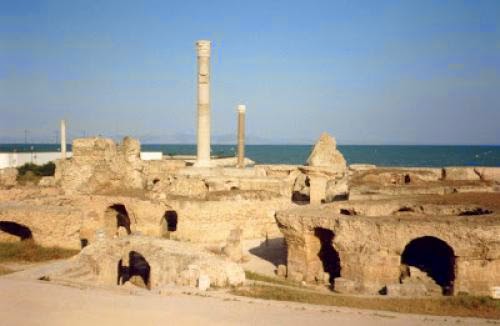
Today, little remain of the great city which once overlooked the Gulf of Tunis. It was so thoroughly obliterated by the Romans that only a shadowy idea of Carthaginian achievements survives, gleaned from the biased and incomplete writings of its Greek and Roman enemies - and from the patient work of archaeologists. Carthage was founded by the Phoenicians, ancient inhabitants of the modern Syrian and Lebanese coasts in the eastern Mediterranean. The Phoenicians were related to the Jews of the Old Testament, sharing their Semitic languages and cultural heritage. The Bible refers to them as Canaanites or Tyrians, and the Hebrew patriarchs were scandalized by their idolatry. The Bible also portrays them as businessmen and seafarers who voyaged to distant lands in search of valuable minerals. The Greeks knew the Phoenicians mainly as merchants, in particular through their exports of a highly-prized purple dye extracted from a shellfish native to the Lebanese coast. The eastern cities of the Phoenicians enjoyed their heyday between the 12th and 8th centuries BC. The mineral riches of the West drew the Phoenicians like a magnet, and it is known that voyages to the western end of the Mediterranean were taking place as early as the 12th century BC. They set up new trading bases, and established regular communications with outposts as far away as the Atlantic coast, at Lixus in Morocco, and at Gadir (Cadiz) in Spain - an area especially valued for its precious ores.

Carthage was founded on the route to these treasures. Some uncertainty surrounds the city's origins. The traditional date of its foundation - 814 BC, as recorded by the Greek historian Timaeus - was long considered an exaggeration. But recent discoveries of remains form the early 8th century BC give the date some credibility. Carthage is said to have been founded by a group of exiles from Tyre (in present-day Lebanon), under the leadership of the king's sister, Elissa (or Dido, as the Roman poet Virgil calls her). The reality is probably that political rivalries forced a section of the Tyrian ruling class into exile with their followers, and that they eventually settled at a key point on the trade routes. Virgil's story makes Dido, founder of Carthage, a contemporary of the Trojan prince Aeneas, founder of Rome, and tells of their love but ends with Dido's suicide as Aeneas follows the instructions of the gods and sails away to Italy and his destiny. The name Carthage derives from the Phoenician Qarthadasht, or New City. Occupying the seaward end of a peninsula jutting out from Tunisia's northern coast, it is not far from the point where the southern and western shores of the Mediterranean are closest. Carthage, then, had strategic importance, commanding the narrow passage between the Mediterranean's eastern and western seas.

Nestling on its promontory, Carthage began to profit by an expansion of commerce in the Mediterranean. Meanwhile, in the east, Phoenicia's light was failing. Its small city-states of Tyre, Sidon, and Byblos (present-day Jubayl) were being eclipsed by the growing might of Assyria. After the Assyrian Empire collapsed at the end of the 7th century BC, Babylon and Persia successively cast long shadows over the Phoenician homeland. Phoenician culture maintained its characteristics over the centuries (its bold seafarers are even credited with having sailed round Africa in about 600 BC), but it was left to Carthage to carry the torch as the centre of Phoenician civilization. Carthage began to develop colonies of its own. By the 4th century BC, settlements with Phoenician-speaking inhabitants dotted the coast of North Africa. Parts of southern Spain, the whole of Sardinia and western Sicily were also settled. Rivalries with Greece and Etruria (in northern Italy) led to warfare over trading frontiers such as Corsica and Sicily. Carthage suffered a dark period towards the end of the 4th century BC when Agathocles, ruler of Syracuse (the chief Greek power in Sicily), took in army to North Africa. After the wars, the Carthaginians relied less exclusively on commercial networks and more on territorial control as the basis of their power.